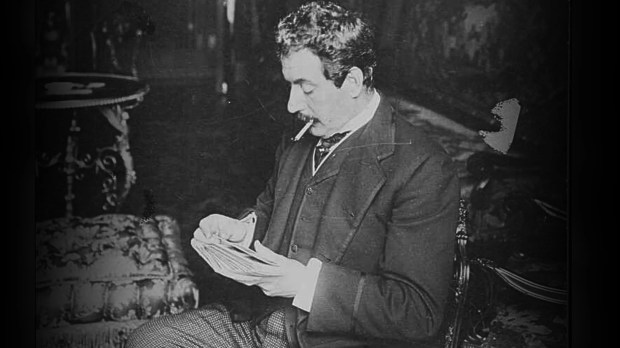
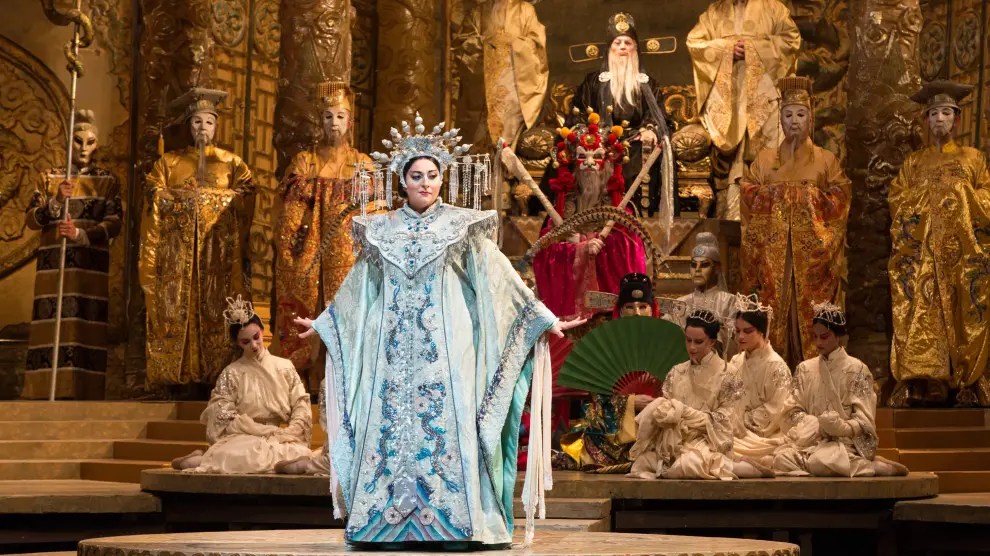
There is broad agreement that the ending of Turandot is weak. After Liù’s death at the hands of the princess’s henchmen, Turandot undergoes a transformation that is far too abrupt: there is hardly any transition between the ruthless woman who tortures Liù to force her to reveal Calaf’s name and the one who suddenly falls at his feet.
The responsibility for this ending does not lie with Puccini, since the libretto had already been written and, as is well known, the composer died before he could complete the music. The last passage he composed was, precisely, Liù’s death. That said, one may speculate that the genius of the composer might have led the story down a different path, one that did not break the dramatic tension that had been so carefully built up. There are testimonies suggesting that Puccini himself was dissatisfied with the ending and that, had he lived longer, he might have forced a different solution from the one we have today.
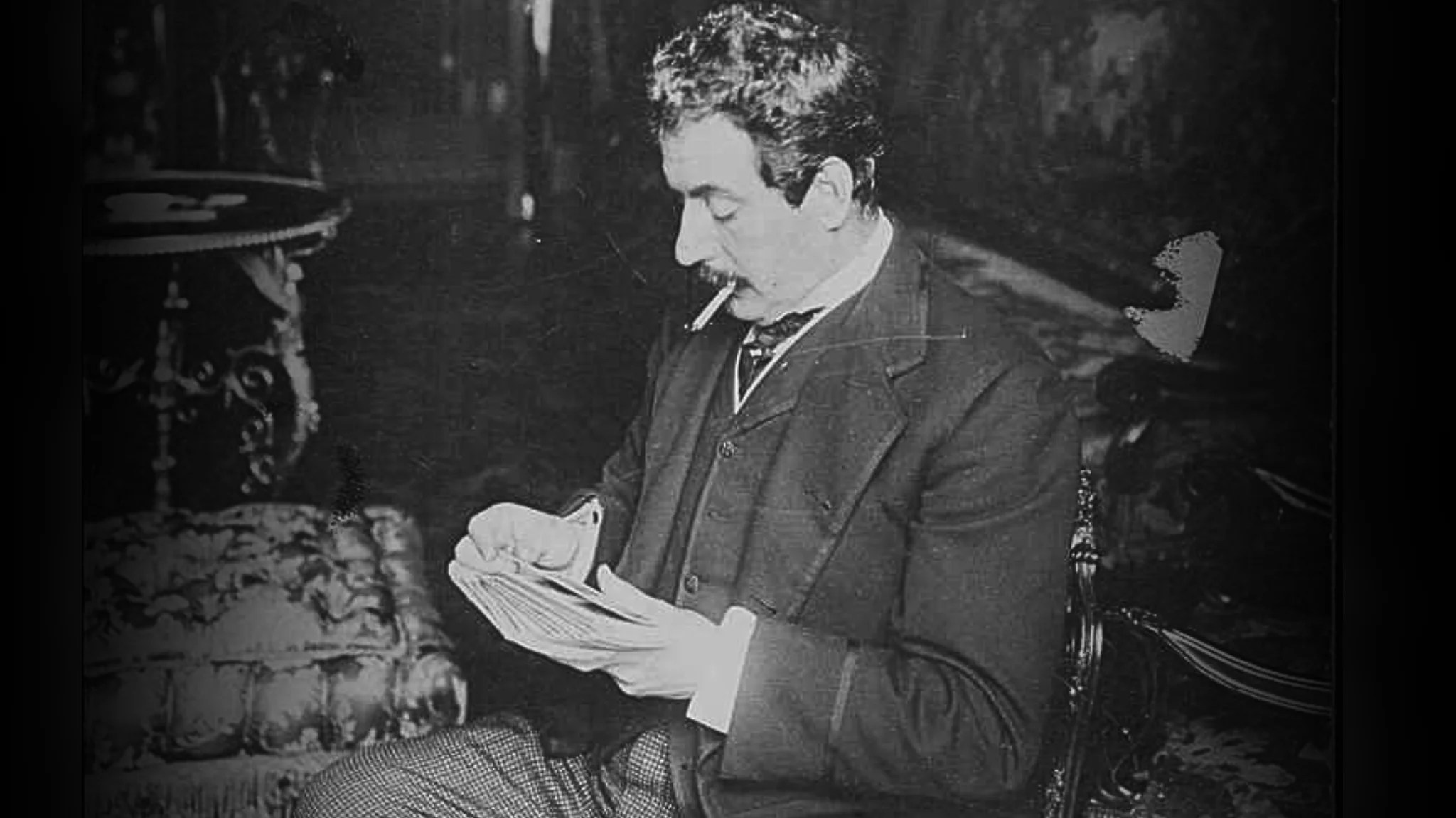
It is tempting to imagine what that ending might have been. Let us recall the story. In Beijing, Turandot, the emperor’s daughter, will marry whoever, provided he is of royal blood, can solve the three riddles she poses. Whoever attempts the trial and fails, however, will lose his head. In the city are Timur, the deposed king of Tartary, accompanied by his faithful slave Liù and by his son, Calaf. Calaf falls in love with Turandot and asks to be put to the test. He solves the riddles, but Turandot succeeds in imposing an additional challenge: if, before dawn, she can guess the prince’s name (which has remained secret), Calaf will die.
Turandot then tries to discover the prince’s name. She tracks down Liù and threatens her so that she will reveal the identity of the man who solved the riddles; but Liù, who is in love with Calaf, refuses. She is tortured, yet does not give in, and finally takes her own life rather than betray the prince. This is where Puccini’s composition ends. But what might have happened from that point onward, instead of the ending we all know and which I hinted at in the opening paragraph? Let us play along.
Calaf is informed of Liù’s death and of the role Turandot played in it. He goes to the emperor, who is distraught by his daughter’s cruelty. In great anguish, he declares that he has no choice but to condemn her to death. Ping, the Grand Chancellor, intervenes and argues that, since Turandot’s guilt stems from the resolution of a riddle (Calaf’s name), she should be given the chance to save herself if she, in turn, can solve another one.
Calaf, furious over Liù’s death, then proposes that he himself should pose the riddle, confident that his wit is superior to Turandot’s. The emperor agrees and decrees that, at dawn the following day, Calaf must set three riddles for Turandot. If she solves any one of them, she will be free; but if she fails all three, she will be beheaded.
Following the emperor’s decision, Turandot is taken to a cell where she must spend the night. There, confronted with the horror awaiting her the next day, she becomes aware of the evil of her own actions. She sings, recalling the faithful Liù, and laments not so much her fate as the cruelty she had displayed until then. In a beautiful and painful aria that forms a counterpoint to Liù’s final scene, she acknowledges her guilt and the destiny that lies ahead of her.
Ping, who has overheard the princess, goes to Calaf and tells him what has taken place. Calaf reacts with anger and says that any suffering Turandot may endure will be too little compared with what she has inflicted on Liù. He continues to lament his love for the woman who caused so much harm to his father’s faithful slave. Ping then tells Calaf that, before dawn, he should convey his reproaches to Turandot, so as to give her, at least, the chance to ask for forgiveness before her death. Calaf hesitates, but in the end agrees to visit Turandot.
When Turandot sees Calaf, she throws herself at his feet and begs for forgiveness. In another aria—one that ought to be unforgettable—she says that she is grateful for her fate, for now that she has seen clearly how dark her heart is, she would no longer be able to go on living. Calaf replies coldly, but finally says that, if his forgiveness counts for anything, he grants it.
The following day, Turandot is brought before the court, where Calaf, in a scene that reverses his own trial in the second act, must pose the riddles to her. Here, however, Turandot will die if she fails all three; if she answers even one correctly, she will be spared.
Calaf presents his first riddle: white and cold, it falls upon the fields, and the sun illuminates it. Turandot answers: snow. The official in charge of the answers reads out the solution to the first riddle and declares that it is not snow. Calaf then explains that the correct answer is moonlight, which falls upon the fields, upon the good and the wicked alike and, at times, protects the former from the latter’s ambushes thanks to the light provided by the sun and reflected in the moon.
The second riddle is then posed: what is it that demands long toil and effort and that, once obtained, satisfies the heart, though it soon changes? Turandot answers: love. The official reads the solution and declares it incorrect. Calaf then explains that true love does not change but endures; that Turandot does not know this, and that this is why her answer has failed. The word hidden behind the riddle was revenge: something pursued with determination, painful in its preparation, yet bringing only dissatisfaction once achieved.
Turandot replies that she understands what he has put before her, and that her unsatisfactory answer is merely proof that her heart has not yet attained the purity it longs for. She laments that she is to die before reaching it.
Hearing this, Calaf seems to hesitate, but finally poses the third riddle: what is as beautiful as dawn, as hard as steel, and as tender as a child’s embrace? Turandot then answers: “Liù.” Calaf nods before the official can read the response, and withdraws with his father, doing no more than brush Turandot’s shoulder with his hand. The curtain falls.
What do you think?