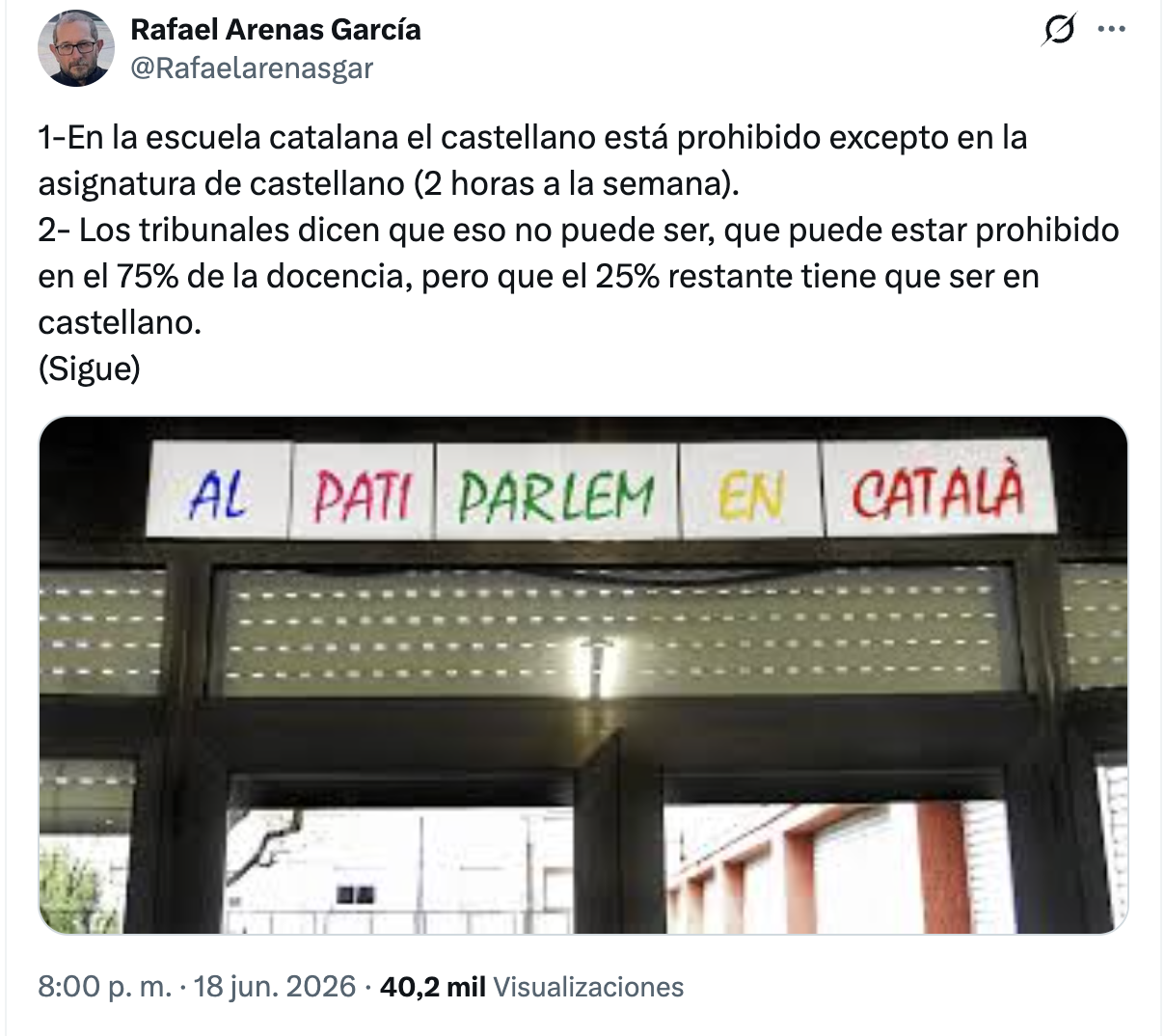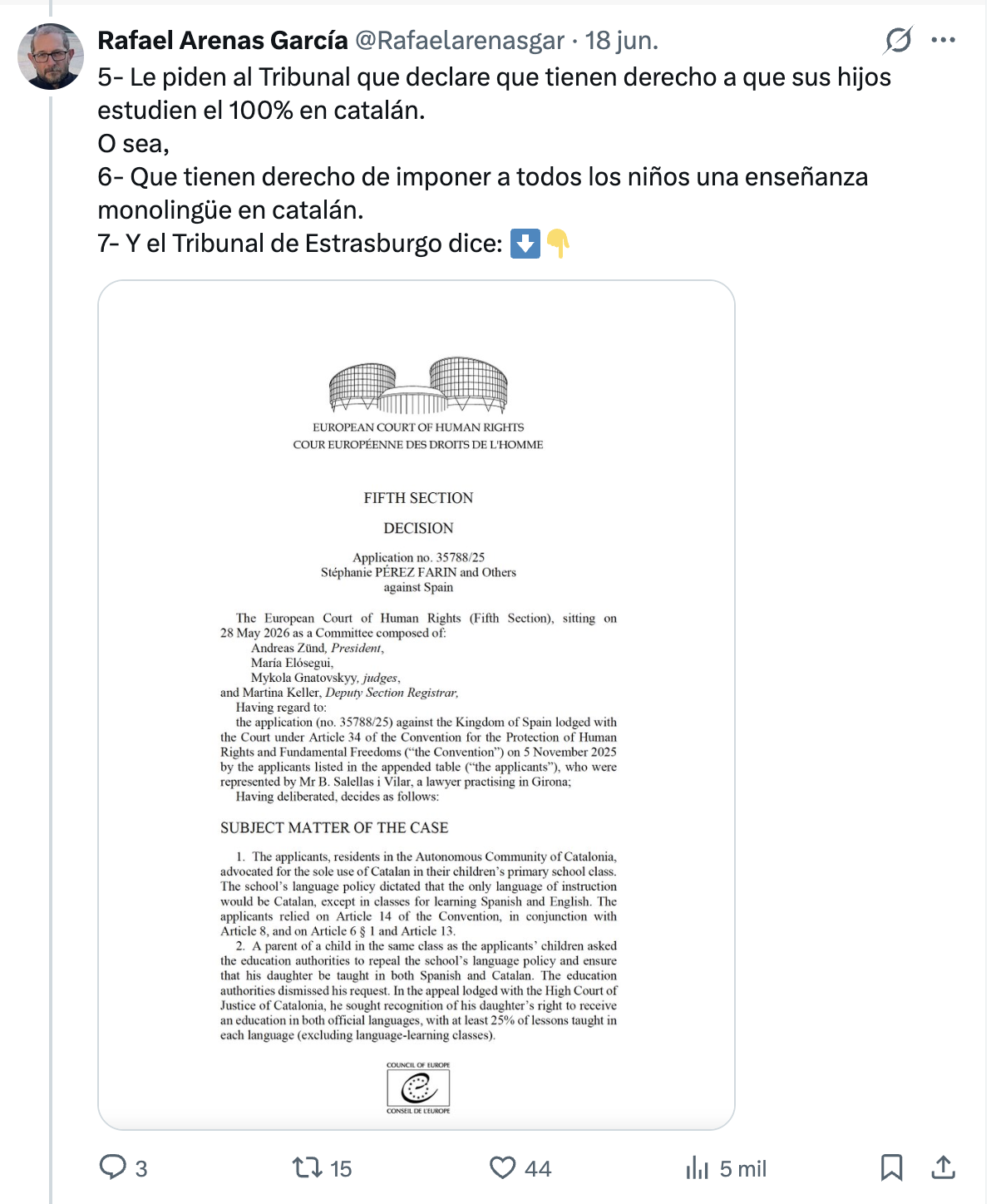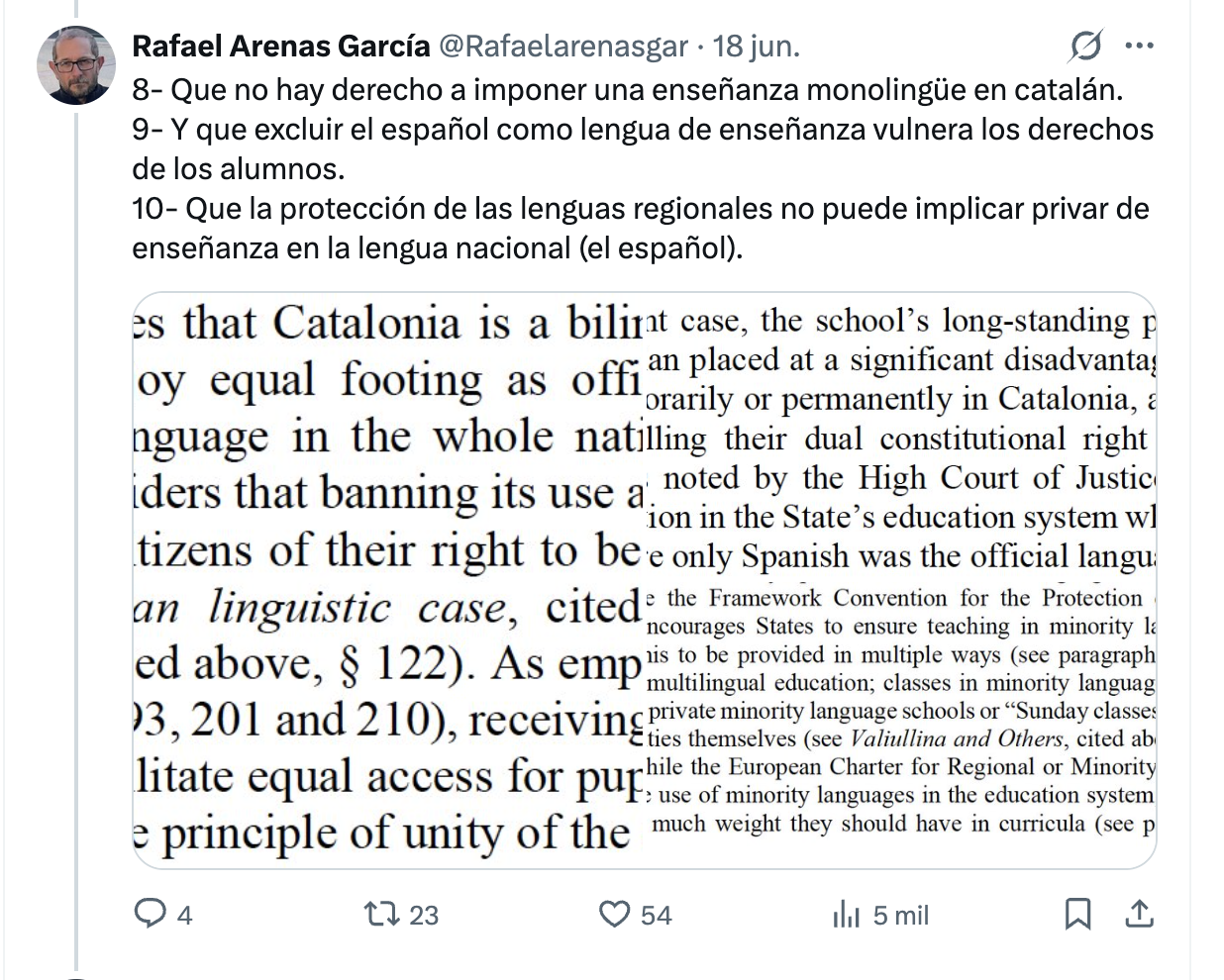
Autor: Rafael Arenas García

Nací, vi gente junto a mi, lluvia tras los cristales. Estudié, algo aprendí. Creí amar y amé. Engendré y ahora junto al mar espero amanecer.

Is Time Slowing Down?

I. The Proposition

One of the most counterintuitive findings in physics is that time does not pass at the same rate in all places and at all moments. A week ago, I wrote a post where I addressed this issue which, I repeat, is not a hypothesis or a speculation, but a well-proven physical reality.

If we synchronize two highly precise clocks, leave one on the surface of the Earth, and place the other at an altitude of 36,000 kilometers (in the orbit of geostationary satellites), after a certain amount of time, we will see that the clock on the satellite appears to have gained time—or, what is the same, the clock on the Earth’s surface has lost time. In cinema, this effect is explained very well in the movie Interstellar, which shows how a few hours on the surface of a world near the edge of a black hole equate to decades on the spaceship located a few thousand kilometers above that surface.

If we were to express the above using a metaphor, it would result in time having a different «density,» if we define density as the rate of the passage of time in a given place and moment compared to that same rate in another place or moment. In the case of Interstellar (or the clock on Earth’s surface compared to the clock in orbit), the variation is linked to space, but it can also be experienced as a change in the rhythm of time itself. Let me explain.

Imagine that from Earth, we measure the rate of time in the vicinity of a black hole. We will see that this rate is slower than what we experience on Earth. For example, we measure it through the changes in the luminosity of supernovas, which appear slower than what we would expect at a «normal» rate (there is no truly «normal» rate, all are equally valid; by «normal,» I mean the one we experience on Earth). After a few years, we measure that rate again and see that the supernova’s rhythm has «speeded up.» Why could that be? Perhaps because the black hole has disappeared (it is not impossible for this to happen).

In any case, before looking into the cause of that change, let’s focus on the fact that, from the perspective of an observation made on Earth, as time passes, the rate of time in that specific location in space has accelerated. In other words, the rate of time was slower before. Time has «speeded up.» And, returning to the density metaphor, time has become «less dense

What I have said so far, as I mentioned, is not speculation. The fact that time passes at different rates in different places and moments is a proven fact. However, this is where the «real» physics ends and, from here on out, what follows is speculation.

If we were to express the above using a metaphor, it would result in time having a different «density,» if we define density as the rate of the passage of time in a given place and moment compared to that same rate in another place or moment. In the case of Interstellar (or the clock on Earth’s surface compared to the clock in orbit), the variation is linked to space, but it can also be experienced as a change in the rhythm of time itself. Let me explain.

Imagine that from Earth, we measure the rate of time in the vicinity of a black hole. We will see that this rate is slower than what we experience on Earth. For example, we measure it through the changes in the luminosity of supernovas, which appear slower than what we would expect at a «normal» rate (there is no truly «normal» rate, all are equally valid; by «normal,» I mean the one we experience on Earth). After a few years, we measure that rate again and see that the supernova’s rhythm has «speeded up.» Why could that be? Perhaps because the black hole has disappeared (it is not impossible for this to happen).

In any case, before looking into the cause of that change, let’s focus on the fact that, from the perspective of an observation made on Earth, as time passes, the rate of time in that specific location in space has accelerated. In other words, the rate of time was slower before. Time has «speeded up.» And, returning to the density metaphor, time has become «less dense

What I have said so far, as I mentioned, is not speculation. The fact that time passes at different rates in different places and moments is a proven fact. However, this is where the «real» physics ends and, from here on out, what follows is speculation.

II. The Slowing of Time

1. Time is Becoming Denser

The speculation upon which the others will be built is that the rate of time has changed with the evolution of the universe. Specifically, for the reasons that will be provided, time would be slowing down (hence the title of the post), which implies that in the universe’s past, time passed «faster» or, in terms of our metaphor, time is becoming «denser

This could also be expressed in another way: the speed of light (c) has varied; specifically, in the past, it would have been faster than it is today. The variation of c at different points in time has been proposed as a «serious» theory by some scientists, although it has not been proven, so it remains in the realm of hypothesis.

The speculation to be developed here is that the density of time increases with the expansion of the universe, such that time currently passes more slowly than in the past, but, at the same time, faster than it will in the future.

Why propose such a hypothesis? Well, as crazy as it may seem, this speculation could help explain certain phenomena that currently do not fit perfectly within standard physics—the model which maintains that time is constant at a cosmic level, which could be expressed as g(t)=1. Let’s take a look.

2. What would the slowing of time explain?

A) The dimness of supernovas

Supernovas are stellar explosions that can light up the sky for several days (if they occur at a distance visible without telescopes). Astronomers track them both in our own galaxy and in others, even very distant ones. In principle, the brightness of a supernova allows us to measure its distance. However, that distance also depends on how much the universe has expanded since the supernova’s light was emitted. Let’s explain this.

If a galaxy is at a certain distance from Earth and a supernova occurs within it, the light from that supernova will reach us after millions of years (the time it takes for light to cover the distance between the supernova and Earth). The brightness of the supernova will be dimmer the farther away it is, just like a lighthouse or a flashlight on our planet’s surface.

Now, when distant galaxies are studied, we notice that the light reaching us is shifted toward the red (redshift). This redshift is an indication that space is growing and pushing galaxies apart. This is the phenomenon of the expansion of the universe. Without this expansion, there would be no redshift—or it would be much weaker and would have to be combined with «blueshift» for galaxies moving toward us instead of away; but this is not observed. All galaxies show redshift, implying they are all moving apart due to the expansion of the universe. Furthermore, this shift is measured and provides a gauge of the speed at which galaxies are receding and their distance from us. Up to this point, we are still within standard physics.

The problem we encounter is that the brightness of supernovas in distant galaxies does not match their redshift. That is, they appear to be farther away than their redshift would suggest. The explanation provided by standard physics is that about 5 billion years ago, the expansion of the universe accelerated, resulting in galaxies being farther away than their redshift implies. To explain this acceleration, scientists rely on something called dark energy, which would have an effect opposite to that of gravity and is introduced in just the right amount to make the observations fit. To be fair, this isn’t just for supernova observations, but also for other cosmic phenomena that would remain unexplained without dark energy.

The speculation that time is slowing down offers an alternative explanation for the mismatch in supernova brightness. If time passes more slowly today than in the past, we are in the same situation—regarding distant galaxies—as an observer near a gravitational field relative to light emitted from outside that field. That light will have a blueshift as a result of the increasing density of time (and this, again, is standard physics).

In the framework of temporal slowing, this would imply that the redshift of galaxies deriving from spatial expansion is partially offset by this temporal blueshift. The result is that the observed redshift does not measure the full displacement of the galaxy, as it loses part of its effect due to this temporal shift. Consequently, distant galaxies are actually farther away than the redshift indicates; meaning the brightness of supernovas matches their true distance if we account for both spatial expansion and the slowing of time.

The slowing of time and the blueshift it would imply is a speculation that has not been formalized; that is, there is no equation to determine the exact rate of this slowing or to explain observable phenomena. However, it has one advantage over dark energy: we know that temporal slowing occurs in nature; it is a proven physical reality. Dark energy, on the other hand, remains a mystery and requires the incorporation of properties such as negative pressure and negative gravity, which do not correspond to any known physical phenomenon. Perhaps with the right mathematics, an equation could be found that uses this slowing to explain the phenomena currently solved by dark energy. If that were the case, the preference for temporal slowing over dark energy should be clear because, as I have said, the slowing of time has been experienced; dark energy has not.

Aside from the above—and although I cannot delve into it here—the hypothesis of temporal slowing would also affect the measurement of galactic distances. The distance of galaxies determined by the brightness of their supernovas would not match the results from other measurement mechanisms. Perhaps that is a topic for another post.

B) The Methuselah Stars

Based on a star’s composition, it is possible to measure its approximate age. The curious thing is that there are some stars that appear to be older than the universe itself. The most famous is known as the Methuselah star, located about 190 light-years from Earth. A few years ago, its age was estimated at 15 billion years—more than a billion years older than the age of the universe. While more recent measurements have reduced this estimate, it still sits right on the very edge of the moment the universe was created.

The temporal slowing hypothesis would imply that the universe has an «effective age» greater than what is currently estimated. If time passed faster during its early stages, physical phenomena would have unfolded at a higher speed from our current perspective. An additional 20% of time in the universe would represent several billion years, providing a natural explanation for phenomena such as the Methuselah star.

C) Galaxies that are too mature for their age

A few years ago (in 2022), it was observed that when looking far away and into the past—since looking far away is the same as looking into the past; if we see something 13 billion light-years away, it means it happened 13 billion years ago—galaxies appeared that were far too mature, far too soon. Barely 300 million years after the Big Bang, we were already finding massive galaxies. Current galaxy formation models could not perfectly account for how this was possible.

Since then, the initial surprise has been tempered, and it seems that some of those galaxies were not as «mature» as originally thought; nevertheless, they continue to pose difficulties for the standard model. In contrast, if time during the initial moments of the universe had passed at a faster rate than it does today, there would have been more time for these galaxies to develop. This would allow their evolution to fit easily within galaxy formation models.

3. Why is time slowing down?

Let us return to standard physics: near a gravitational field, time slows down; but this is not the only phenomenon that occurs. Space is also affected. If we measure something in the direction leading to the center of the gravitational field, we will see that it stretches. Using our metaphor of time density for cases where it slows down, this increase in density is accompanied, in the vicinity of a gravitational field, by a stretching of space.

That any effect on time also affects space seems natural in Relativity. After all, spacetime is one, and Einstein’s equations measure distances in spacetime. Not distances in space and distances in time separately, but distances in the combination of both. In the same way, any curvature of space also implies a modification of time. There is no one without the other.

Based on the above, what we should ask ourselves is: if the universe expands (stretches), why shouldn’t that stretching also produce a modification in time—in the rate of time? In principle, it would be the natural outcome, so the expansion of space should have some incidence on time as well. Of course, this is a speculation (not even a hypothesis yet), but a hypothesis that rests upon the relationship that General Relativity established between space and time. The difference here is that, instead of considering that connection locally, it is extended to the entire universe.

A different matter altogether is putting that relationship into an equation (and that is what transforms a speculation into a theory). It would be necessary to start from the equations of General Relativity to see what happens with a variable time. Perhaps then, a relationship could be established between the three components of everything in the universe: space, time, and «content»—that is, matter and energy, or, expressed in a more technical term, the energy-momentum tensor ((T_μν)).

Standard physics «plays» only with space and its content, while keeping time as an invariant. The challenge is to attempt to explain the functioning of the universe mathematically with a time that can vary. I suspect the equations would be more complex, but perhaps closer to the profound reality. In any case, as I have stated, what is being postulated—a difference in the temporal density of the universe linked to its expansion—would be nothing more than a particular case of the more general approaches of General Relativity. If near a gravitational field we observe that spatial stretching and the «densification» of time go hand in hand, why wouldn’t the expansion of the universe and the variation in the density of time go hand in hand as well?

4. The Arrow of Time

If this slowing of time were to exist, it could help us understand something else: why events move from the past to the future and not the other way around. This is the age-old issue of the arrow of time, which has traditionally been linked to the increase in entropy or the expansion of the universe. I believe that the slowing of time would allow for a simpler explanation based on a principle that frequently recurs in General Relativity: objects tend to move along the shortest path in spacetime—an idea that explains precisely why things fall toward the center of gravitational fields.

If we move from objects in motion to objects at rest and study their pure displacement in time, taking into account the higher density of time in the future compared to the past, we are presented with the following framework:

If we imagine time as a grid, the squares that compose it would be larger in the past (lower temporal density) than in the future (higher temporal density). If we now look at the red dot, which could represent a particle or an object, the question is whether it will move toward the past (blue dot) or toward the future (orange dot). Well, the answer is clear: it will move toward the future because, from the center of its own square, there is less distance to the center of the future square than to the one in the past. The law stating that it will follow the shortest path will push it toward the future, provided that future is denser than the past.

Of course, this is nothing more than speculation, but it could have significant consequences if it were formalized. One of the «mysteries» of physics is that equations work the same way toward the future as they do toward the past. It is as if the arrow of time were indifferent to physical equations, which does not align with our daily experience. The hypothesis is that this irrelevance of time stems from the assumption—erroneous, from the point of view of the speculation presented here—that the density of time is the same in the past, present, and future. If, instead of assuming an invariant time, we considered one that slows down in the future, perhaps the equations would lose the symmetry they currently hold between future and past. The catch is that they would also have to be reformulated so that time is not an invariant, but rather one more variable to be managed.

III. Conclusion

As I mentioned in another post, the variation in the rate of time has fascinated me since I was a child. However, I have never been able to explore it in such detail as I can now, thanks to AI tools. They allow you to ask questions, refine ideas, compare perspectives, confront doubts, and instantly obtain the information you need, explained at a level you can understand. A few days ago, I began speculating about the possibility of a variation in the rate of time throughout the history of the universe, testing it against Claude, ChatGPT, and Gemini. Now, I must confess that I see more and more clearly that this is a line of inquiry that should not be abandoned.

Claude is more «enthusiastic» about the approach, while ChatGPT tends to try to steer me back toward the boundaries of standard physics, and Gemini remains somewhere in the middle. Regardless, they have not only made it easier for me to continue this speculative game, but along the way, I have learned—or I believe I have learned—a few things about cosmology and physics that were completely foreign to me just a couple of weeks ago.

Therefore, this post is also a result of everything AI tools have to offer; though, of course, any nonsense is entirely my own responsibility.

¿Se está ralentizando el tiempo?

I. Planteamiento

Una de las constataciones físicas más contraintuitivas es la de que el tiempo no transcurre al mismo ritmo en todos los lugares y en todos los momentos. Hace una semana escribía una entrada donde abordaba esa cuestión que, repito, no es una hipótesis o una especulación, sino una realidad física bien contrastada. Si sincronizamos dos relojes muy precisos, dejamos uno en la superficie de la Tierra y colocamos el otro a 36.000 kilómetros de altura (en la órbita de los satélites geoestacionarios), al cabo de un tiempo veremos que el reloj colocado en el satélite parece haber adelantado o -lo que es lo mismo- el reloj situado en la superficie de la Tierra se ha retrasado. En el cine, este efecto se explica muy bien en la película Interestelar, donde se ve como unas horas en la superficie de un mundo cerca del borde de un agujero negro, son decenas de años en la nave que está situada unos miles de kilómetros por encima de dicha superficie

Si se quiere expresar lo anterior con una metáfora, resultaría que el tiempo tiene diferente «densidad», si entendemos densidad como el ritmo del paso del tiempo en un lugar y momento dado comparado con ese mismo ritmo en otro lugar o momento. En el caso de Interestelar (o del reloj en la superficie de la Tierra comparado con el reloj situado en un satélite en órbita) la variación se vincula al espacio, pero también puede experimentarse como un cambio del ritmo en el tiempo. Me explico.

Imaginemos que desde la Tierra medimos el ritmo del tiempo en la cercanía de un agujero negro. Veremos que ese ritmo es más lento que el que experimentamos en la Tierra. Por ejemplo, lo medimos a partir de los cambios de luminosidad de las supernovas, que son más lentos que los que esperaríamos a un ritmo «normal» (no hay ningún ritmo «normal», todos son igualmente válidos, con «normal» quiero decir el que experimentaríamos en la Tierra). Al cabo de unos años volvemos a medir ese ritmo y vemos que el ritmo de la supernova se ha «acelerado». ¿Por qué puede ser eso? Pues porque el agujero negro haya desaparecido (no es imposible que pase). En cualquier caso, antes de entrar en la causa de ese cambio de ritmo qudémonos con que, desde la perspectiva de la observación que se realiza en la Tierra, con el transcurso del tiempo el tiempo, en ese lugar concreto del espacio que estamos examinando, se ha acelerado. Dicho de otra manera, el ritmo del tiempo era más lento antes. El tiempo se ha «acelerado». Y, si volvemos a la metáfora de la densidad, el tiempo se ha vuelto «menos denso».

Lo anterior, como digo, no es especulación. El hecho de que el tiempo transcurre a ritmos diferentes en distintos lugares y momentos es una constatación. Ahora bien, aquí acaba la física de verdad y, de ahora en adelante, lo que habrá es especulación.

II. La ralentización del tiempo

1. El tiempo se vuelve más denso

La especulación sobre la que se construirán las demás es la de que el ritmo del tiempo ha cambiado con la evolución del universo. En concreto, por las razones que se darán, el tiempo se estaría ralentizando (y de ahí el título de la entrada), lo que implica que en el pasado del universo el tiempo transcurría «más rápido» o, lo que es lo mismo (en nuestra metáfora), el tiempo se va volviendo «más denso». También se podría expresar de otra forma: la velocidad de la luz (c) ha variado; en concreto, en el pasado sería más rápida que en la actualidad. La variación de c en distintos momentos se ha planteado como una propuesta «seria» por parte de algunos científicos, aunque no ha sido probada, por lo que se mueve en el plano de la hipótesis.
La especulación que aquí se desarrollará es la de que la densidad del tiempo aumenta con la expansión del universo, de tal forma que en la actualidad el tiempo transcurre más lento que en el pasado, pero, a la vez, más rápido que lo que transcurrirá en el futuro.

¿Por qué plantear esta hipótesis? Bueno, aunque parezca una locura, esta especulación podría ayudar a explicar algunos fenómenos que en la actualidad no encajan perfectamente con la física estándar, la que sostiene que el tiempo es constante a nivel cósmico, lo que se podría expresar como g(t)=1. Vamos a verlo a continuación.

2. ¿Qué explicaría la ralentización del tiempo?

A) El débil brillo de las supernovas

Las supernovas son explosiones estelares que durante varios días pueden iluminar el cielo (si se produce a una distancia que permita verla sin telescopios) y que los astrónomos siguen tanto en nuestra propia galaxia como en otras, incluso muy lejanas. En principio, el brillo de la supernova nos permite medir la distancia a la que se encuentra. Ahora bien, esa distancia depende también de cuánto se ha expandido el universo desde que se emitió la luz de la supernova. Vamos a explicar esto.
Si una galaxia está a una determinada distancia de la Tierra y una supernova se forma en la galaxia, la luz de la supernova nos llegará al cabo de millones de años (el tiempo que tarda la luz en cubrir la distancia entre la supernova y la Tierra). El brillo de la supernova será más débil cuanto más lejos esté, igual que sucede con un faro o una linterna en la superficie de nuestros planeta.

Ahora bien, cuando se estudian las galaxias lejanas se aprecia que la luz que nos llega está corrida hacia el rojo (redshift). Este corrimiento hacia el rojo de la luz es indicio de que el espacio está creciendo y separando las galaxias entre sí. Es el fenómeno de la expansión del universo. Sin esa expansión no habría corrimiento al rojo, o, en su caso, sería más débil y debería combinarse con «corrimiento al azul» para las galaxias que en vez de alejarse se acercaran; pero esto no se observa. Todas las galaxias tienen corrimiento al rojo, lo que implica que todas se están separando como consecuencia de la expansión del universo. Ese corrimiento, además, se observa y nos da una medida de la velocidad a la que se alejan las galaxias y de la distancia a la que se encuentran. Hasta aquí todo física estándar, de nuevo.

El problema con el que nos encontramos es que el brillo de las supernovas en las galaxias lejanas no se corresponde con su corrimiento al rojo. Esto es, parecen estar más lejos de lo que correspondería a su corrimiento al rojo. La explicación que da la física estándar es que hace unos 5000 millones de años la expansión del universo se aceleró, con la consecuencia de que las galaxias están más lejos de lo que resulta de su corrimiento al rojo. Para explicar esa aceleración se recurre a una cosas que se ha denominado energía oscura, que tendría un efecto contrario al de la gravedad y que se introduce en la justa medida que se necesita para que las observaciones cuadren. Para ser justos, no solamente las observaciones sobre las supernovas, sino también otros fenómenos cósmicos que sin esa energía oscura no tendrían explicación.

La especulación de que el tiempo se ralentiza ofrece una explicación alternativa al desajuste de brillo de las supernovas. Si el tiempo transcurre de manera más lenta en la actualidad que en el pasado estamos en la misma situación, respecto a las galaxias lejanas, en la que se encuentra el observador situado cerca de un campo gravitacional respecto a una emisión de luz que viene de fuera del campo gravitacional. Esa luz tendrá un corrimiento hacia al azul como consecuencia del aumento de la densidad del tiempo (y esto, de nuevo, es física estándar); lo que en el planteamiento de la ralentización temporal implicaría que el corrimiento al rojo de las galaxias que deriva de la expansión del universo se ve en parte compensado por el corrimiento al azul temporal. El resultado es que el corrimiento al rojo observado no mide todo el desplazamiento de la galaxia, pues pierde parte de su efecto como consecuencia de ese corrimiento temporal hacia el azul. La consecuencia es que realmente las galaxias lejanas están más lejos de lo que indica el corrimiento al rojo; lo que implica que el brillo de las supernovas se ajusta a su distancia real si tenemos en cuenta tanto la expansión espacial como la ralentización del tiempo.

La ralentización del tiempo y el corrimiento al azul que implicaría es una especulación que no está formalizada; esto es, no hay una ecuación que permita determinar cuál es esa ralentización y que permita explicar los fenómenos observables. Ahora bien, tiene una ventaja sobre la energía oscura: la ralentización temporal sabemos que sucede en la naturaleza, es una realidad física contrastada. La energía oscura, sin embargo, no se sabe qué es y ha de incorporar propiedades como una presión negativa y una gravedad negativa que no se corresponden con ningún fenómeno físico conocido. Quizás con las matemáticas adecuadas pueda encontrarse una ecuación que haciendo uso de la ralentización permita explicar los fenómenos que ahora se resuelven por la energía oscura. Si llegara a ser así, la preferencia por la ralentización sobre la energía oscura debería ser clara porque, como digo, la ralentización se ha experimentado; la energía oscura, no.

Aparte de lo anterior, y aunque aquí no pueda entrar en ello, la hipótesis de la ralentizacion temporal afectaría también a la medición de la distancia de las galaxias. La distancia de las galaxias determinada por el brillo de sus supernovas no coincidiría con el que resulta de otros mecanismos de medición. Quizás para otra entrada.

B) Las estrellas Matusalén

A partir de la composición de las estrellas es posible medir su edad aproximada. Lo curioso es que hay alguna que parece tener una edad mayor que el propio universo. Se la conoce como estrella Matusalén y está a 190 años luz de la Tierra. Hace unos años se consideraba que podría tener 15.000 millones de años, lo que es más de 1.000 millones de años por encima de la edad del universo. Mediciones más recientes han reducido la estimación de su edad, pero sigue situándose en el borde mismo del momento de creación del universo.

La hipótesis de la ralentización temporal supondría que el universo tiene una edad «efectiva» mayor de la que ahora se estima. Si en sus primeras etapas el tiempo transcurría más rápido, los fenómenos físicos se desarrollaban, desde nuestra perspectiva actual, a más velocidad. Un 20% más de tiempo en el universo serían varios miles de millones de años que permitirían que fenómenos como la estrella Matusalén tuvieran una explicación natural.

C) Galaxias demasiado maduras para su edad

Hace unos años (en 2022) se observó que cuando se miraba lejos y al pasado (es lo mismo mirar lejos que al pasado, si vemos algo que se encuentra a 13.000 millones de años luz es que sucedió hace 13.000 millones de años) aparecían galaxias demasiado maduras demasiado pronto. Apenas 300 millones de años después del Big Bang ya nos encontrábamos con galaxias masivas. Los modelos de formación de galaxias no daben perfecta cuenta de cómo podía ser eso.

Desde entonces se han matizado la sorpresa inicial y parece ser que algunas de esas galaxias no eran tan «madura» como se pensó inicialmente; pero aún así no dejan de plantear dificultades para el modelo estándar. En cambio, si el tiempo en los momentos iniciales del universo hubiera transcurrido a un ritmo mayor que el actual, habría habido más tiempo para el desarrollo de esas galaxias, lo que haría encajar con facilidad su desarrollo con los modelos de fomación de galaxias.

3. ¿Por qué se ralentiza el tiempo?

Volvamos a la física estándar: cerca de un campo gravitatorio el tiempo se vuelve más lento; pero este no es el único fenómeno que sucede. El espacio también se ve afectado. Si medimos algo en la dirección que lleva al centro del campo gravitatorio veremos que se alarga. Recuperando la metáfora de la densidad del tiempo para los casos en que se ralentiza, ese aumento de la densidad va acompañado, en las cercanías de un campo gravitatorio, de un estiramiento del espacio.

Que cualquier afectación en el tiempo afecte al espacio parece natural en la relatividad. Al fin y al cabo, el espaciotiempo es uno, y lo que miden las ecuaciones de Einstein son distancias en el espacio tiempo. No distancias en el espacio y distancias en el tiempo, sino distancias en la combinación de ambos. De la misma forma, cualquier curvatura del espacio implica también una modificación del tiempo. No hay una sin otra.

A partir de lo anterior, lo que deberíamos preguntarnos es: si el universo se expande (estira), ¿por qué ese estiramiento no habría de producir también una modificación en el tiempo, en el ritmo del tiempo? Sería, en principio, lo natural, de manera que la expansión del espacio debería tener alguna incidencia también en el tiempo. Por supuesto, esto es una especulación (ni siquiera una hipótesis), pero una hipótesis que descansa sobre la relación que la relatividad general estableció entre espacio y tiempo. Lo que cambia es que en vez de considerar esa conexión de manera local se extiende a todo el universo.

Cuestión distinta es poner esa relación en una ecuación (y eso es lo que transforma una especulación en una teoría). Sería necesario partir de las ecuaciones de la relatividad general para, a partir de ellas, ver qué pasa con un tiempo variable. Quizás entonces pueda establecerse una relación entre los tres componentes de todo lo que hay en el universo: espacio, tiempo y «contenido»; esto es materia y energía, o, expresado con un término algo más técnico, el tensor energía momento (T_μν).

La física estandar «juega» solo con el espacio y su contenido, pero manteniendo el tiempo como invariable. El desafío es intentar explicar matemáticamente el funcionamiento del universo con un tiempo que puede variar. Supongo que las ecuaciones serán más complejas, pero, quizás, más cercanas a la realidad profunda. En cualquier caso, como digo, lo que se postula (una diferencia en la densidad temporal del universo vinculada a su expansión, no pasaría de ser un caso particular de los planteamientos más generales de la relatividad general. Si cerca de un campo gravitatorio constatamos que estiramiento espacial y «densificación» del tiempo van unidos; ¿por qué no iban a ir unidos expansión del universo y variación en la densidad del tiempo?

4. La flecha del tiempo

Si esa ralentización del tiempo existiera podría servirnos para entender otra cosa: por qué los eventos van del pasado al futuro y no al revés. El viejo tema de la flecha del tiempo, que se ha vinculado al aumento de la entropía o a la expansión del universo. Creo que la ralentización del tiempo permitiría una explicación más sencilla a partir de un principio que se repite con frecuencia en la relatividad general: los objetos tienden a moverse por el recorrido más corto en el espacio tiempo, una idea que explica, precisamente, por qué las cosas caen hacia el centro de los campos gravitatorios.

Si de objetos en movimiento pasamos a objetos en reposo y estudiamos su puro desplazamiento en el tiempo, teniendo en cuenta la mayor densidad del tiempo en el futuro respecto al pasado nos encontramos con el siguiente esquema.

Si imaginamos el tiempo como una cuadrícula, los cuadrados que la integran serán más grandes en el pasado (menor densidad temporal que en el futuro (mayor densidad temporal). Si ahora nos fijamos en el punto rojo, que puede representar una partícula o un objeto, la duda que se plantea es si se moverá hacia el pasado (punto azul) o hacia el futuro (punto naranja). Bien, la respuesta es clara: se moverá hacia el futuro porque desde el centro de su propia cuadrícula hay menos distancia al centro de la cuadrícula del futuro que a la del pasado. La ley de que seguirá el camino más corto la empujará al futuro, siempre que ese futuro sea más denso que el pasado.

Por supuesto, no es más que una especulación, pero que podría tener consecuencias si pudiera formalizarse. Así, uno de los «misterios» de la física es que las ecuaciones funcionan igual hacia el futuro que hacia el pasado. Es como si la flecha del tiempo fuera indiferente para las ecuaciones físicas, lo que no se compadece con nuestra experiencia cotidiana. La hipótesis es que esa irrelevancia del tiempo deriva de considerar -erróneamente, desde el punto de vista de la especulación que aquí se presenta- que la densidad del tiempo es la misma en el pasado, en el presente y en el futuro. Si en vez de asumir ese tiempo invariable consideraramos otro que se ralentiza en el futuro quizás las ecuaciones dejaran de tener la simetría que ahora tienen entre futuro y pasado; lo que pasa es que habría también que reformularlas para que el tiempo no fuera invariante, sino una variante más que habría que gestionar.

III. Conclusión

Como decía en otra entrada, la variación en el ritmo del tiempo me fascina desde niño; pero nunca había podido explorarla con tanto detalle como ahora, gracias a las herramientas de IA, que te permiten preguntar, matizar, contrastar perspectivas, enfrentarte a dudas y obtener al instante la información que precisas explicada al nivel que tú puedes entender. Hace unos días comencé a especular con la posibilidad de una variación en el ritmo del tiempo a lo largo de la historia del universo, contrastándolo tanto con Claude como con ChatGPT y Gemini y ahora he de confesar que cada vez veo con más claridad que esta es una línea de investigación que no debería abandonarse. Claude es más «entusiasta» con el planteamiento, mientras que ChatGPT tiende a intentar reconducirme a los límites de la física estándar y Gemini se sitúa en una posición intermedia; pero, en cualquier caso, no solamente me han facilitado seguir con este juego especulativo, sino que en el camino he aprendido -o creo haber aprendido- unas cuantas cosas sobre cosmología y física que hace un par de semanas me eran completamente ajenas.
Así que esta entrada es también resultado de todo lo que ofrecen las herramientas de inteligencia artificial; aunque, por supuesto, los disparates son de mi única responsabilidad.

Time, Elementary Particles, Black Holes…

1. Time is slower near gravitational fields

Since I was a child, I have been fascinated by the fact that time does not pass at the same rate everywhere. If we take two perfectly synchronized clocks, leave one on Earth’s surface, and place the other in a spacecraft traveling at a significant fraction of the speed of light, upon the ship’s return, we would find that the clock on board has ticked away fewer seconds than the one on Earth. Actually, this would happen whether the ship travels at thousands of kilometers per second or if it were a plane at a thousand kilometers per hour, or a train at a hundred. In all cases, the moving clock will have run slower than the one at rest; it is just that at speeds of a few kilometers per second or less, the difference is barely perceptible.

The above is curious, and we will return to it; but there is another scenario where a clock runs slower: when it is near a gravitational field. A clock on the surface of the Earth runs slower than one on a satellite a few hundred kilometers above us. This difference, though small, is vital. It must be accounted for to adjust the functioning of GPS, for example.

I want to dwell on this last point because I find it especially fascinating—particularly if we consider a causal inversion that might be surprising but has, I believe, significant consequences.

What do I mean by causal inversion? Well, we take for granted that gravity «pulls» things and that is why Newton’s apple moves from the tree to the ground. It feels natural, as if it requires no further explanation. The fact that time passes slower near a gravitational field seems like a curious trivia point that most people ignore.

And yet, what makes things fall is precisely that time dilation near gravitational fields. If things go «down,» it is because time passes slower near a body with mass. Why?

To understand this, we must think that every object not only moves through space but also moves through time. The movement of an object must be described by taking into account both its displacement in space and its displacement in time.

The y-axis represents displacement in space, and the x-axis represents displacement in time. The blue line represents the path through spacetime of an object at rest. At instant 0, it is at point (0,5). At instant 18, it is at point (18,5). It has moved 18 units (seconds, if you will) in time, but it has not moved in space. Simple, right?

Another thing we must keep in mind is that an object always follows the shortest path in spacetime. In the previous image, the object is initially in the grid square defined by points (0,5), (1,5), (1,4), and (0,4) and must move to the grid square defined by points (1,5), (2,5), (2,4), and (1,4). The shortest line to reach that square is the one drawn by the blue line. As we have seen, this is a line that translates into movement in time, not in space.

Now, let’s see what happens if we introduce a gravitational field, assuming the field is located along the x-axis. If so, time passes more slowly the «lower» we are on the y-axis. When one second passes at point (0,1), two seconds might have passed at point (0,5). This causes the squares of the previous graph to transform into trapezoids.

The object at point (0,5), which we have called B, will continue to tend toward the shortest path through spacetime. It will attempt to move from the grid square it currently occupies—[(0,5), (1,5), (1,4), and (0,4)]—to the next one—[(1,5), (2,5), (2,4), and (1,4)]—via the shortest possible route. However, what happens is that the shortest line between these two grid squares is no longer a perpendicular to the y-axis, but rather this other one:

Since it is no longer a square but a trapezoid, the shortest line between one grid square and the next is no longer perpendicular to the y-axis; instead, it «descends» in the direction where time passes more slowly.

In other words, the object naturally tends to fall. I would like to point out that the fall is not oblique, but perpendicular, because the graph shows displacement in spacetime. What the graph indicates is that at second 1, the object is at point 4.8 (approx.); at second 2, it is at point 4.6… and at second 17, it is at point 1.7 (approx.). That is, the graph represents a fall from a height of 5 meters (for example) to 1.7 meters in 17 seconds. Of course, these figures do not correspond to any real fall on Earth; they are intended to show that the «downward» movement of objects—that is, toward gravitational masses—is an inevitable consequence of two things: first, that objects tend to follow the shortest path in spacetime; and second, that time passes more slowly near gravitational fields.

This concept is also featured in this video starting at minute 4, which served as the source for this idea

To put it another way: it is time that makes things fall. Time dilation is not a consequence of gravity; rather, gravity is an inevitable effect of time dilation.

We will leave it here for now (we will return to this) to examine time dilation as a consequence of velocity.

2. Time, Velocity, and Mass

As I mentioned at the beginning: if we move at high speed (actually, at any speed), time will pass more slowly. Why?

It has to do with the fact that all objects move through spacetime with a constant «velocity.» If the object (or particle) has no temporal displacement (it does not «age»), all its movement is transferred to space, and it moves at the maximum possible speed: the speed of light, hereafter referred to as c If the object is completely still in space, all its displacement occurs in time. This is what happens to us, as we are practically at rest (although the Earth moves through space at a speed of several hundred kilometers per second relative to the cosmic background, that speed is irrelevant compared to c).

However, if we go from being seated on Earth to moving through space in a spacecraft, part of the movement that was previously temporal becomes spatial, which necessarily causes time to pass more slowly for us.

And here we come to something curious: as can be seen, the photon has no temporal movement; and this is related to the fact that it lacks mass. That is, there is a relationship between mass and the orientation of the movement vector. Bodies (or particles) with mass move through time, whereas massless particles only move through space. In a way, mass is the measure of a particle’s anchorage in time; the greater the mass, the greater the displacement in time and the smaller the displacement in space. It could be said that mass is the vibration in time of particles or objects. Since the total displacement must be constant (nothing can be simultaneously still in both time and space), the mass of elementary particles and their natural velocity are related, as can be seen in the following graph:

The same can be said of massive objects [components of atoms (protons, neutrons—electrons are already elementary particles—), atoms, molecules, stones, people, planets, or stars…]; they have a displacement (or vibration, if you prefer) in both space and time. This temporal vibration is precisely a consequence of their mass. In a way, mass creates time.

3. Mass and Elementary Particles

Let us return to what we saw in Section 1: near gravitational fields, time runs slower. A second in the vicinity of a star with enormous mass can be a minute or a year compared to a second millions of kilometers away from that star. Mass causes time in its environment to slow down. At the same time, it is mass that causes particles to move through time. If I may use a metaphor: a particle with mass is like a ball that you submerge in a liquid. By Archimedes’ principle, the ball will tend to rise within the liquid; the massive particle will tend to move toward the future in time.

Now then, why does this thrust occur, and, at the same time, why does time pass more slowly in the vicinity of a gravitational field? It is tempting to speculate that it is for a reason similar to what explains the thrust in Archimedes’ principle. Let’s see.

As has been reiterated, in the vicinity of a gravitational field, time passes more slowly. This is evident even in the path of light. Light always travels at speed c; but near a gravitational field, because time passes slower, from the perspective of an external observer, the light will appear to be going slower. This is what is known as the Shapiro delay. In a way, it is as if spacetime were «denser» in the vicinity of a gravitational field. But where does this higher density come from?

Obviously, this is purely speculative; but could it be that massive particles are «holes» in spacetime? A kind of bubble that travels as a vibration through space (photons) and through both space and time (massive particles). Seen from this perspective, it would explain why particles are «elementary.» It does not depend on them being very small, but on the fact that, being an anomaly in the structure of spacetime, their interior is, in a literal sense, nothingness. There is no possibility of division because it does not, and cannot, have any internal structure. From there, the higher density in the vicinity of a gravitational mass could be understood either as spacetime’s attempt to fill the hole or as a result of the spacetime that has been «displaced» from the particle; or perhaps a combination of both. In any case, this higher density—which manifests as the slowing of time—would be linked to the presence of massive particles and objects.

Current physics explains elementary particles as excitations of a field. What a field actually is remains unexplained by theoretical physics, but it is a necessity to account for how particles function. And each elementary particle has its own field; that is, we currently have to imagine seventeen different fields «inhabiting» spacetime, which is the framework in which they all reside. If we understand particles as holes moving through spacetime, these fields are no longer necessary. The difference between one particle and another would simply derive from the shape that the spacetime hole takes for each of them. In the case of the photon, for example, we would be looking at a purely spatial hole, without a temporal dimension, which would explain its behavior (displacement at c in space and no vibration in time).

4. Black Holes

From the perspective of particles as holes in a spacetime with varying «densities» (identified by time dilation), black holes can be understood as regions where the density has become so high that it has somehow «crystallized.» Beyond the event horizon, there would be a spacetime so dense—that is, with such extreme time dilation—that movement would be impossible. The exterior of this «solid» part would rub against the fluid spacetime surrounding it, giving rise to phenomena such as Hawking radiation.

This would explain the relatively low density observed in known black holes. Curiously, these supermassive black holes have a density equivalent to that of water; but from this perspective, it is not surprising: density measures the distribution of mass in space, but what characterizes a black hole is the «density» of spacetime itself. If a point of rigidity is reached that prevents the movement of particles, they will be unable to move, even if they are separated from one another. They would be like mosquitos trapped in spacetime amber.

5. Conclusion

What I explained in Sections 1 and 2 is entirely orthodox and corresponds—as far as I know—to the postulates of General and Special Relativity; although I am fond of the simplification that allows us to understand gravity as an imperative requirement of the rule by which an object follows the shortest path in spacetime between two points—which, in the vicinity of a gravitational field, implies moving toward the center of said field. The need to compensate in time for the displacement of objects moving through space is a fundamental finding of Special Relativity. The «temporal vibration» of matter is also a postulate supported by standard physics, although, as far as I am aware, it has not yet been empirically directly proven.

It is, however, purely speculative to maintain that elementary particles are holes in spacetime. Nevertheless, I appreciate the simplicity with which this idea would explain the elementary nature of particles, the time dilation near gravitational fields, and the low density of black holes.

Tiempo, partículas elementales, agujeros negros…

1. El tiempo es más lento cerca de los campos gravitatorios

Desde niño me ha fascinado que el tiempo no transcurra igual en todos los lugares. Si tenemos dos relojes perfectamente sincronizados, uno lo dejamos en la superficie de la Tierra y otro lo metemos en una nave espacial que viaje a una velocidad que sea significativa respecto a la velocidad de la luz, a la vuelta de la nave veremos que el reloj en ella habrá marcado menos segundos que el reloj en Tierra. Bueno, en realidad, eso sucedería tanto si la nave va a varios miles de kilómetros por segundo como si es un avión a mil kilómetros por hora o un tren a cien kilómetros por hora. En todos los casos el reloj en movimiento habrá ido más lento que el reloj que ha permanecido en reposo; lo que sucede es que a velocidades de unos pocos kilómetros por segundo o menos la diferencia es muy difícilmente apreciable.

Lo anterior es curioso y volveremos a ello; pero hay otro supuesto en el que el reloj irá más lento: cuando esté cerca de un campo gravitatorio. Un reloj en la superficie de la Tierra va más lento que otro en un satélite a unos centenares de kilómetros sobre la superficie terrestre. Y la diferencia, aunque sea pequeña, es relevante. Tiene que tenerse en cuenta a la hora de ajustar el funcionamiento del GPS, por ejemplo.

Ahora quiero detenerme en esto último, porque me parece especialmente fascinante. Sobre todo si tenemos en cuenta una inversión causal que puede, quizás, sorprender, pero que tiene -me parece- consecuencias relevantes.

¿A qué me refiero con la inversión causal? Bueno, damos por sentado de que la gravedad «atrae» a las cosas y que por eso la manzana de Newton se desplaza del árbol al suelo. Es algo natural que nos parece que no merece mucha más explicación. Lo que acabo de comentar, lo de que el tiempo transcurre más lento en las cercanías de un campo gravitatorio parece un dato curioso que, además, muchas personas ignoran.

Y, sin embargo, lo que hace que las cosas caigan es, precisamente, esa dilatación temporal cerca de los campos gravitatorios. Si las cosas van «hacia abajo» es porque el tiempo transcurre más lento cerca de un cuerpo con masa. ¿Por qué?

Para entenderlo tenemos que pensar que todo objeto no solamente se desplaza (o puede desplazarse) en el espacio, sino que también se desplaza en el tiempo. El movimiento de un objeto ha de describirse teniendo en cuenta tanto su desplazamiento en el espacio como su desplazamiento en el tiempo. Veámoslo con la siguiente imagen.

El eje y representa el desplazamiento en el espacio y el eje x el desplazamiento en el tiempo. La línea azul representa el recorrido en el espacio tiempo de un objeto que está quieto. En el instante 0 está en el punto (0,5). En el instante 18 está en el punto (18,5). Se ha movido 18 instantes (segundos si se quiere) en el tiempo, pero no se ha movido en el espacio. Fácil, ¿no?

Otra cosa que tenemos que tener en cuenta es que un objeto recorre siempre el camino más corto en el espacio tiempo. En la imagen anterior, el objeto está iniciamente en la cuadrícula definida por los puntos (0,5), (1,5), (1,4) y (0,4) y tiene que desplazarse a la cuadrícula definida por los puntos (1,5), (2,5), (2,4) y (1,4). La línea más corta para llegar a esa cuadrícula es la que dibuja la línea azul. Como hemos visto, una línea que traduce movimiento en el tiempo, no en el espacio.

Veamos ahora lo que sucede si introducimos el campo gravitatorio, suponiendo que el campo gravitatorio se localiza en el eje de las x. Si es así, el tiempo transcurre más lento cuanto más abajo estemos en la línea de las y. Cuando transcurre un segundo en el punto (0,1) pueden haber transurrido dos segundos en el punto (0,5). Eso hace que los cuadrados del gráfico anterior se conviertan en trapecios.

El objeto que se encuentra en el punto (0,5), y al que hemos llamado B seguirá tendiendo a recorrer su camino en el espacio tiempo por el camino más corto. Intentará pasar de la cuadrícula en la que se encuentra [(0,5), (1,5), (1,4) y (0,4)] a la siguiente [(1,5), (2,5), (2,4) y (1,4)] por el camino más corto, lo que pasa es que la línea más corta entre las dos cuadrículas ya no es una perpendicular al eje y, sino esta otra:

Al no ser un cuadrado, sino un trapecio la línea más corta entre una y otra cuadrícula no es perpendicular al eje y, sino que «baja» en la dirección en la que el tiempo transcurre más lento.

Es decir, el objeto tiende naturalmente a caer. Llamo la atención sobre que la caída no es oblicua, sino en perpendicular, porque el gráfico muestra el desplazamiento en el espacio tiempo. El gráfico lo que indica es que en el segundo 1 el objeto está en el punto 4,8 (aprox.); en el segundo 2 en el punto 4,6… y en el segundo 17 en el punto 1,7 (aprox.). Esto es, el gráfico representa una caída desde una altura de 5 metros (por ejemplo) hasta 1,7 metros en 17 segundos. Por supuesto, las cifras no se corresponden a ninguna caída real en la Tierra, sino que lo que pretenden es que se aprecie que el movimiento de los objetos «hacia abajo»; esto es, hacia las masas gravitatorias es una consecuencia inevitable de dos cosas: la primera, que los objetos tienden a seguir el trayecto más corto en el espacio tiempo. La segunda, que el tiempo transcurre más lentamente cerca de los campos gravitatorios.

Esta idea se encuentra también en este vídeo a partir del minuto 4, que es de donde tomé la idea.

Dicho con otras palabras, es el tiempo el que hace que las cosas caigan. La dilatación temporal no es una consecuencia de la gravedad, sino que la gravedad es un efecto inevitable de la dilatación temporal.

Vamos a dejarlo aquí de momento (volveremos) para examinar ahora la dilatación temporal como consecuencia de la velocidad.

2. Tiempo, velocidad y masa

Lo comentaba al comienzo: si nos desplazamos a una alta velocidad (en realidad, a cualquier velocidad), el tiempo transcurrirá más lentamente. ¿Por qué?

Tiene que ver con que todos los objetos se mueven por el espacio tiempo con una «velocidad» constante. Si el objeto (o partícula) no tiene desplazamiento temporal (no «envejece») todo su movimiento se traslada al espacio y se mueve a la velocidad máxima posible, la velocidad de la luz, c a partir de ahora. Si el objeto está completamente quieto todo su desplazamiento se produce en el tiempo. Es lo que nos pasa a nosotros, que estamos prácticamente quietos (aunque la Tierra se desplaza por el espacio a una velocidad de varios centenares de kilómetros por segundo respecto al fondo cósmico esa velocidad es irrelevante respecto a c).

Ahora bien, si pasamos de estar sentados en la Tierra a movernos por el espacio en una nave espacial, parte del movimiento que antes era temporal pasa a ser espacial, lo que hace que, necesariamente, el tiempo transcurra más lentamente para nosotros.

Y aquí llegamos a algo curioso: como puede verse el fotón no tiene movimiento temporal; y esto se relaciona con que carece de masa. Es decir, hay una relación entre la masa y la orientación del vector del movimiento. Los cuerpos (o partículas) con masa se desplazan en el tiempo; mientras que las partículas sin masa solamente se desplazan en el espacio. De alguna forma, la masa es la medida de anclaje en el tiempo de las partículas; cuanto mayor es la masa, mayor es el desplazamiento en el tiempo y menor el desplazamiento en el espacio. Podría decirse que la masa es la vibración en el tiempo de las partículas o de los objetos. Como el desplazamiento total ha de ser constante (no hay nada que esté, simultáneamente, quieto en el tiempo y en el espacio), la masa de las partículas elementales y su velocidad natural están relacionadas, como puede verse en el siguiente gráfico:

Lo mismo puede predicarse de los objetos masivos [componentes de los átomos (protones, neutrones -los electrones ya son partículas elementales-), átomos, moléculas, piedras, personas, planetas o estrellas…] tienen un desplazamiento (vibración si se prefiere) tanto en el espacio como en el tiempo; y esa vibración temporal es precisamente, consecuencia de su masa. De alguna forma, la masa crea el tiempo.

3. Masa y partículas elementales

Volvamos ahora a lo que veíamos en el epígrafe 1: cerca de los campos gravitatorios el tiempo transcurre más lento. Un segundo en la cercanía de una estrella de una masa enorme puede ser un minuto o un año a unos millones de kilómetros de esa estrella. La masa hace que en su entorno el tiempo se vuelva más lento. Al mismo tiempo, la masa es la que hace que las partículas se desplacen en el tiempo. Si se me permite la metáfora, una partícula con masa es como un balón que introduces en un líquido. Por el principio de Arquímedes, el balón tenderá a subir dentro del líquido; la partícula masiva tenderá a moverse hacia el futuro en el tiempo.

Ahora bien, ¿por qué se produce ese empuje y, a la vez, por qué el tiempo transcurre más lento en la cercanía de un campo gravitatorio? Resulta tentador especular que por una razón parecida a la que explica el empuje del principio de Arquímedes. Veamoslo.

Como ya se ha reiterado, en las cercanías de un campo gravitatorio el tiempo transcurre más lentamente. Esto se aprecia, incluso, en el recorrido de la luz. La luz siempre viaja a velocidad c; pero en las cercanías de un campo gravitatorio, como el tiempo transcurre más lento, desde la perspectiva de un observador externo, la luz estará yendo más lenta. Es lo que se conoce como retraso de Shapiro. De alguna forma es como si el espacio tiempo fuera «más denso» en las cercanías de un campo gravitatorio. Ahora bien, ¿de dónde viene esa mayor densidad?

Obviamente, esto es puramente especulativo; pero, ¿podría ser que las partículas masivas fueran «huecos» en el espacio tiempo? Una especie de burbuja que se desplaza como una vibración a lo largo del espacio (fotones) y en el espacio y en el tiempo (las partículas con masa). Visto desde esta perspectiva, se explicaría por qué las partículas son «elementales». No depende de que sean muy pequeñas, sino de que al ser una anomalía en la estructura del espacio tiempo su interior es, en sentido literal, la nada; sin posibilidad alguna de división porque no tiene, ni puede tener, ninguna estructura. A partir de ahí, podría entenderse la mayor densidad en las cercanías de una masa gravitatoria como consecuencia o bien del intento del espacio tiempo de rellenar el hueco o bien como resultado de la presencia del espacio tiempo que ha sido «expulsado» de la partícula; o como una combinación de ambas cosas. En cualquier caso, esa mayor densidad, que se traduce en la ralentización del paso del tiempo, se conectaría con la presencia de las partículas y objetos masivos.

La física explica en la actualidad las partículas elementales como excitaciones de un campo. Lo que sea un campo no lo explica la física teórica, pero es una necesidad para dar cuenta de cómo funcionan las partículas. Y cada partícula elemental tiene su propio campo; o sea, que en la actualidad tenemos que imaginar diecisiete campos diferentes que «habitan» en el espacio tiempo, que es el marco en el que descansan todos ellos. Si entendemos las partículas como huecos que se desplazan por el espacio tiempo, no son necesarios los campos, la diferencia entre una y otra partícula deriva de la forma que adopta el hueco del espacio tiempo para cada una de ellas. En el caso del fotón, por ejemplo, estaríamos ante un hueco puramente espacial, sin dimensión temporal, lo que explicaría su comportamiento (desplazamiento a c en el espacio y sin vibración en el tiempo).

4. Agujeros negros

Desde la perspectiva de las partículas como huecos en un espacio tiempo que tiene diferentes «densidades» (identificadas por la dilatación temporal) los agujeros negros pueden ser entendidos como regiones en las que la densidad se ha vuelto tan alta que, de alguna forma, ha «cristalizado». Más allá del horizonte de eventos lo que habría sería un espacio tiempo tan denso; esto es, con una dilatación temporal tan extrema, que sería imposible el movimiento. El exterior de esa parte «sólida» entraría en fricción con el espacio tiempo fluido que la rodearía, lo que daría lugar fenómenos como la radiación de Hawking.

Esto explicaría la relativamente baja densidad que se observa en los agujeros negros conocidos. Curiosamente, estos agujeros negros supermasivos tienen una densidad equivalente a la del agua; pero desde esta perspectiva no es soprendente: la densidad mide el reparto de masa en el espacio, pero lo que convierte en característico a un agujero negro es la «densidad» del espacio tiempo. Si se alcanza el punto de rigidez que impide el movimiento de las partículas; estás, incluos aunque separadas entre sí no podrán desplazarse. Serían como mosquitos atrapados en ámbar de espacio tiempo.

5. Conclusión

Lo que explicaba en los apartados 1 y 2 es absolutamente ortodoxo y se corresponde -hasta donde yo sé- con lo que postulan la relatividad general y la relatividad especial; aunque me gusta la simplificación que permite entender la gravedad como una necesidad imperiosa de la regla por la que un objeto sigue en el espacio tiempo el camino más corto entre dos puntos; lo que, en las cercanías de un campo gravitatorio implica moverse hacia el centro de dicho campo. La necesidad de compensar en el tiempo el desplazamiento de los objetos que se mueven en el espacio es un hallazgo de la relatividad especial. La vibración en el tiempo de la materia también es un postulado que sostiene la física estándard, aunque, hasta donde sé, no ha sido comprobado empíricamente de forma directa.

Es, sin embargo, puramente especulativo sostener que las partículas elementales son huecos del espacio tiempo. Me gusta, sin embargo, la sencillez con la que explicaría el carácter elemental de las partículas, la dilatación temporal cerca de los campos gravitatorios y la baja densidad de los agujeros negros.

Hate Speech, Catalan Nationalism, and Hispanophobia

ABSTRACT: I. The Construction of Identity and Its Enemies. II. The Construction of Catalan Identity. III. From Spain to Spaniards. IV. Hate Speech and Hispanophobia: 1. Hate Speech and the Limitation of Rights. 2. Limitation of Rights and Nationalism in Catalonia. V. Hate Speech and Public Institutions. VI. Conclusion.

I. The Construction of Identity and Its Enemies

The construction of a group’s identity often involves opposition to one or more other groups. It is a commonplace phenomenon that most of us have experienced. From football clubs (what unites more than the rivalry of a Barça–Madrid, Espanyol–Barça, Oviedo–Sporting, Athletic–Real Sociedad, Betis–Sevilla…?) to local rivalries between neighbouring towns or even between urban tribes. Nations are no different. National identity, in part, arises from opposition to other countries. One’s own virtues are highlighted and, almost inevitably, conflicts with other nations come to be portrayed as a struggle between “good” (one’s own nation) and “bad” (the others). This can be clearly seen in these 30 seconds of Lady Hamilton, the film by Alexander Korda, where in less than a minute it is explained why the British Empire is so good and, consequently, why those who attack it are so bad.

The British Empire is a community in which each territory has its own purpose and function; yet there are those who, driven by ambition, seek to destroy what others have built. In this way, England’s actions elsewhere are explained and justified, while at the same time those who oppose it are discredited. Crystal clear.

II. The Construction of Catalan Identity

The construction of the Catalan nation follows the same pattern: elements must be identified that give it a distinct identity, one that also serves to differentiate Catalans within the broader community in which they were historically integrated without major controversy—the Spanish people as a whole. This requires, on the one hand, a particular interpretation of history in which Catalans are endowed with special virtues. In this regard, for example, the fanciful speech by Pau Casals at the United Nations, which I share below, fits well.

As do the arguments now put forward by the Institut Nova Història.

The template is always the same: a people defined by positive traits (industriousness, a peaceful and enterprising character…) whose origins can be traced back to prehistory, and which must confront those who, lacking such qualities, seek to hinder its progress. This can already be clearly seen in the works of Catalan nationalists from the early twentieth century—the period in which Pau Casals spent his youth—which likely helps to better understand his speech at the United Nations in 1971. Thus, in the book by Antoni Rovira i Virgili, History of Nationalist Movements, originally published between 1912 and 1914, we read:

This linguistic territory closely corresponds to the original area of the Iberian race, from which the Catalans descend. Prat de la Riba states: “When the Phoenician traveller whose account was recorded by Avienus, one hundred and fifty years before Christ, travelled along the Sardinian Sea coast, he encountered there the Iberian ethnos, the Iberian nationality, extending from Murcia to the Rhône, that is, from the Libyco-Phoenician peoples of eastern Andalusia to the Ligurians of Provence. Those peoples are our ancestors; that Iberian ethnos is the first link that history allows us to see in the chain of generations that have forged the Catalan soul.”

Soon, the territory of the Iberian race, open to incursions, was invaded by other races (…). But when the Roman Empire collapsed under the pressure of the barbarians, and the medieval nuclei that would give rise to the historical nationalities emerged, the old Iberian race resurfaced, marked by the powerful imprint of Rome, yet preserving a vivid ethnic individuality.

(…) Yet this historical event [the discovery of America] would not have had such a disastrous influence on our homeland had Castile not committed a great injustice. By the famous codicil to the will of Isabella the Catholic, the citizens of the Catalan-Aragonese Crown were excluded, under penalty of death, from trade with the Indies (…). Without this unjust prohibition, Catalonia would have carried its genius for work and creation overseas; it would have become, like England, a great maritime and commercial power. The Catalan language would have spread throughout the Americas; today there would be, in the New World, alongside nations of Spanish and Portuguese language, nations of Catalan language, and Catalan would be one of the great world languages. The antipathy of Castile, manifested in Isabella’s codicil, destroyed at that historical moment the magnificent future that awaited Catalonia.”

The narrative continues; but what has been quoted is sufficient: a distinct identity set against external enemies who strive to prevent the nation from flourishing. The same pattern we saw in the explanation of the British Empire given to Emma Hamilton in the film by Alexander Korda.

In principle, this line of thinking should belong to a bygone stage; and to a large extent, I believe that is indeed the case in most places. It is hard to imagine that anyone in the United Kingdom today would find persuasive what we saw in the 1941 film. National constructions based on hypothetical ethnic distinctions stretching back to prehistory tend, at best, to provoke a smile; if not to raise serious concerns. Yet in Catalonia this remains the official doctrine. It is not insignificant to recall that a Catalan public university—the University of Tarragona—bears the name of the author of the passages quoted above, and that the speech by Pau Casals—outlandish in its content—was taken from the official YouTube channel of the Parliament of Catalonia.

In other words, in Catalonia a distorted view of history continues to be embraced, one in which “Castile” is held responsible for the fact that Catalonia is not a sovereign and prosperous nation—a nation which, in Antoni Rovira i Virgili’s account, would have been comparable to nineteenth- and early twentieth-century England.

III. From Spain to Spaniards

This is already a problematic approach in itself; yet it can become even more troubling when the shift is made from “Castile” to “Castilians,” a term some use to refer to all Spaniards who are not of Catalan origin (with “Catalan” understood as extending to Valencia and the Balearic Islands). In this framing, “Castilians” are portrayed as colonizers, dominators, and extractors of Catalonia’s wealth. Moreover, they are burdened with the stereotypes typical of any identity-building process based on opposition to other groups. Just as Catalans are depicted as modern, hardworking, cultured, and peace-loving, “Castilians” are cast as lazy, violent, uncultured, and primitive.

Am I exaggerating? Let us recall what Jordi Pujol, President of the Generalitat between 1980 and 2003 and the most influential political figure in Catalonia over the past half century, wrote:

“The Andalusian man is not a coherent man; he is an anarchic man. He is a destroyed man. (…) The other type of immigrant is, generally, an unformed man. He is a man who for hundreds of years has gone hungry and has lived in a state of ignorance and of cultural, mental, and spiritual poverty.”

What Jordi Pujol wrote is particularly relevant, as he did so at a time (the 1970s) when Catalonia was home both to those whose families had lived in the region for generations and to more than two million people who had come from other parts of Spain. These were the people then referred to as charnegos, a term that included not only recent arrivals but also their children, many of whom had already been born and raised in Catalonia. Pujol’s reflection was therefore not abstract, nor a historical reconstruction in the manner of Antoni Rovira i Virgili; rather, it was directly relevant to a society in which groups of people could be distinguished on the basis of their family origins. The disparaging words of the man who would later serve for more than twenty years as President of the Generalitat stigmatized a collective that had a significant presence in the region he would go on to govern.

In other words, Catalan nationalism is, to some extent, built upon a caricature of history that portrays “Castilians” as harmful to Catalonia and its development and, at the same time, upon stereotypes in which the supposedly “elevated” character of the Catalan spirit and its capacity for work and innovation are contrasted with the economic, moral, and intellectual poverty attributed to other peoples of Spain—or to Spaniards more generally. This is not a subterranean phenomenon; rather, it finds expression in official institutions (the Rovira i Virgili University mentioned earlier, street names filled with the figures of early twentieth-century Catalan nationalist ideologues) and in public figures, beginning with the most prominent name in Catalan nationalism of the late twentieth and early twenty-first centuries, Jordi Pujol and his “destroyed” Andalusian man.

Examples could be multiplied; to conclude with just two, one relatively recent instance is the reflection by Oriol Junqueras on genetic differences between Catalans and the rest of the Spaniards (“the Spaniards,” for Junqueras, who does not regard Catalans as Spanish).

And two articles by the third-to-last President of the Generalitat, Quim Torra. The first, from 2015, in which he states that Catalans have spent 289 years enduring what no civilized people has ever endured. Spain exercises its right of conquest and humiliates with the harshest contempt; a situation that must lead to the recovery of the “homeland,” an exclusionary concept (if we have one homeland—the Catalan one—we cannot have any other) that gives meaning to the struggle.

And the second, more widely known, in which he describes as beasts those who do not share his views on the Catalan language.

There are many more examples; but I have chosen these because they come from individuals who have occupied the highest positions within Catalan institutions. Two have served as Presidents of the Generalitat, and Oriol Junqueras is the leader of a party that has held the presidency of the Generalitat and has been part of its government at various times. At present, although not part of the government, he supported the current President of the Generalitat, Salvador Illa.

In other words, the stigmatization of Spain (understood as an entity to which Catalonia should not belong) and of non-Catalan Spaniards (“Castilians”) is an essential part of Catalan nation-building; both through a particular interpretation of history and through the reaction to the arrival of workers from other parts of Spain in the mid-twentieth century—a reaction in which stereotypes about the supposed “superiority” of Catalans (cultured, enterprising, hardworking, and peaceful) over “Spaniards” (uncultured, lazy, primitive, and violent) took hold in certain segments of society. The fact that leaders such as Jordi Pujol or Quim Torra expressed such ideas openly, even in writing, is evidence of this.

Those of us who disagree with nationalism in Catalonia experience this on a daily basis. Insults linked to our condition as “outsiders” (and directed even at people born in Catalonia but from families originating elsewhere) are commonplace and take many forms, especially on social media, where Spain, Spaniards, and their symbols are frequently denigrated.

This connects with a discourse that insists on the “colonization” of Catalonia and on labeling as “colonists” those who do not share nationalist positions.

As can be seen, this is nothing more than a crude translation of the basic premise of Catalan nationalism: nation-building through opposition to an external power that constrains its development. An external power that is also associated with individuals whose values and abilities are portrayed as inferior to those attributed to “Catalans.” I use quotation marks because the concept of “Catalan” employed by nationalism excludes many citizens of Catalonia—either because they do not share the Catalan language as a defining identity marker or because they support Catalonia’s continued integration within Spain.

IV. Hate Speech and Hispanophobia

1. Hate Speech and the Limitation of Rights

Can the foregoing be considered a manifestation of hate speech? From my perspective, the answer is already yes; but in order to justify it, we must first pause to consider what hate speech entails and why it must be addressed—a task I undertook a few months ago in another post.

There, I argued that any intervention against hate speech—that is, its criminal or administrative prosecution, or the restriction by other means of speech deemed hostile toward a given group—affects freedom of expression and must therefore be properly justified. Such justification exists when words (speech) can lead to an effective limitation of the rights of the members of that group, who are harmed precisely because of their belonging to it. Without such an effective limitation of rights, there would be no grounds for restricting freedom of expression, however unpleasant or misguided the speech might be. This is because freedom of expression is the cornerstone upon which public debate in a democratic society rests—the debate that is a necessary precondition for the decisions that determine the course of that society.

This limitation of rights is what, in each historical and geographical context, allows us to identify what constitutes a vulnerable group in the sense required by the hate speech framework. It is important, in my view, to anchor the identification of a group as susceptible to hate speech in the effective limitation of rights, because a priori categorizations can easily turn hate speech regulation into a tool of asymmetric censorship. It is more meaningful to start from the actual limitations of rights suffered by the members of a given group by virtue of belonging to it, and from there to assess how the denigration, stigmatization, or caricaturing of that group may contribute to such limitations of rights—thus justifying their classification as hate speech. This approach is consistent with General Policy Recommendation No. 15 on combating hate speech adopted by the European Commission against Racism and Intolerance.

2. Limitation of Rights and Nationalism in Catalonia

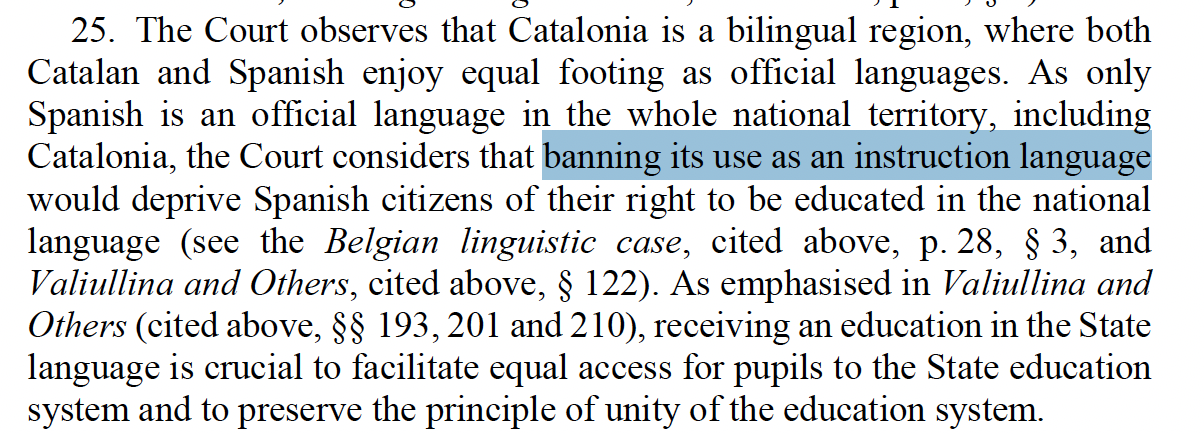
In the case at hand, such limitations of rights—affecting those who belong to groups that dissent from nationalist positions—do exist. Recently, it has been judicially established that hostile messages directed at those who identify with the Spanish language and the Spanish nation may constitute hate speech. This ruling relates to the harassment suffered by the family in Canet de Mar who obtained a court decision guaranteeing their daughter an education in which both Catalan (75%) and Spanish (25%) would be present; this led to calls on social media to identify the family so that they would be forced to leave. In other words, their identification as Spanish speakers and their sense of Spanish identity were decisive factors in attempts to restrict their rights.

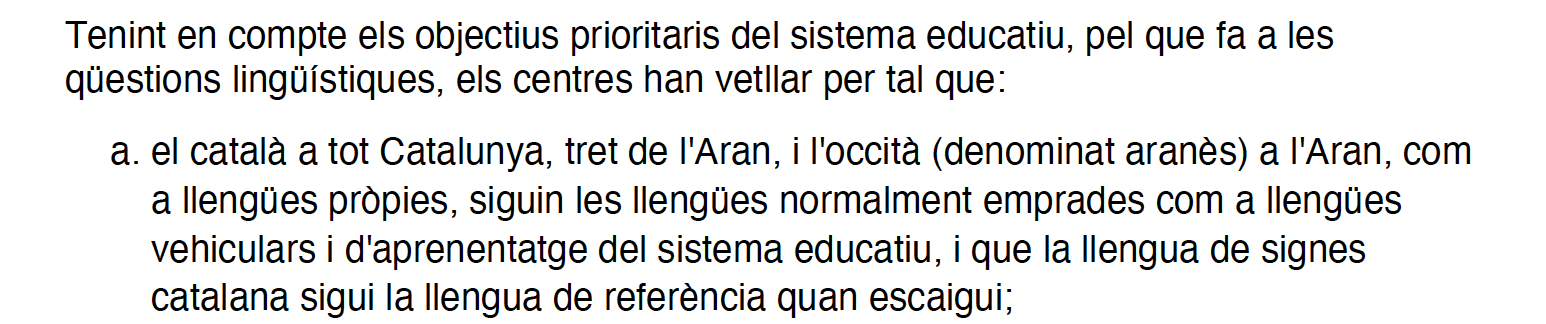
Limitations of rights affecting those who dissent from nationalism in Catalonia occur with some frequency. One example is the restriction on access to an education in which Spanish, alongside Catalan, serves as a language of instruction. Beyond the case referred to in the judgment mentioned above, there have been others in which families requesting bilingual education were harassed or had their businesses boycotted, with the clear intention of forcing them to abandon their demand for schooling in which Spanish is used as a language of instruction.

Without leaving the linguistic sphere, one may also recall the case of a nurse of Andalusian origin who lost her job in a public hospital after questioning the requirement of a certain level of Catalan in order to obtain a permanent position. Her criticism, which she shared on social media, triggered insults—also on social media—and prompted action by the Catalan authorities, leading to the adoption of disciplinary measures; measures that were explicitly taken because she had challenged those linguistic requirements.

More recently, an amateur theatre group was also boycotted as a result of a play in which it questioned language policy in Catalonia.

Finally, limitations of rights can also be observed affecting non-nationalist students at Catalan public universities. In some cases, it has been judicially declared that academic authorities violated students’ fundamental rights by restricting their activities on campus for ideological reasons; in others, harassment suffered on university campuses at the hands of nationalist groups has led to criminal convictions. I have addressed these issues in some detail here.

This limitation of rights affecting members of a particular group in Catalonia is quite clearly connected to what was noted at the outset: Catalan nationalist identity is, to a significant extent, constructed through opposition to Spanish identity, with Spain and Spaniards also being held responsible for having historically limited the possibilities of the Catalan nation. This narrative is projected onto those who, while living in Catalonia, have family origins in other parts of Spain and do not accept nationalist positions (which translates, for example, into advocating for bilingual education or questioning language requirements for access to employment). There is an additional nuance to consider: individuals of Catalan family origin and with Catalan as their mother tongue may also experience these same limitations of rights if they do not share the nationalist outlook. The label reserved for such individuals is botiflers—that is, traitors (although the term originally had a different meaning).

The necessary conditions are therefore present for the need to monitor, in Catalonia, discourse aimed at fostering hostility or contempt toward “Castilians,” Spain, Spanish identity, including its language. This is not arbitrary; rather, it responds to the real existence of limitations of rights connected to individuals’ belonging to a particular group—a group that is clearly defined by its opposition to Catalan nationalist positions, as explained above.

V. Hate Speech and Public Institutions

From what has been set out so far, it follows that there is a form of hate speech in Catalonia directed at Spain, Spaniards, and those Catalans who dissent from nationalist positions and identify as Spanish. This discourse is also linked to the limitation of certain rights affecting the members of this group—limitations that materialize, above all, in the areas of linguistic rights and freedom of expression.

In light of this reality, it is striking that not only anonymous individuals or those without public relevance take part in this discourse of hate, but that it is also reinforced from within public institutions. In this regard, it is noteworthy that, on the website of Catalonia’s public radio, the following message could be seen just a few days ago:

The issue is not that such a statement might be made by a commentator (although I would invite readers to replace “Castilians” with any other group and consider how it would be perceived); rather, it is that the website of a public radio broadcaster would feature, as a highlighted message, the claim that “Castilians are rude people.” This is, I believe, unacceptable.

Along the same lines, there is a clear disparity in how groups are treated: the group identified with Spain and Spanish identity is treated differently from others. Offensive messages about Spain on social media, or the burning of Spanish flags, are regarded as expressions of free speech; whereas equivalent actions directed at other groups are investigated as hate crimes.

In other words, public authorities in Catalonia find it difficult to acknowledge that there exists a form of hate speech directed at Spain and Spaniards that also has an impact on the limitation of individual rights. However, in light of what has been discussed so far, this is not surprising; since public power in Catalonia is exercised by openly nationalist parties or by others (such as the PSC) which, despite not defining themselves as nationalist, have nevertheless adopted the nationalist narrative—both symbolically, in linguistic matters, and, to a significant extent, in their understanding of the relationship between Catalonia and the rest of Spain.

As we have seen, from a nationalist perspective there are clearly “good” actors (Catalans) and “bad” ones (Spaniards). The schematic and somewhat naïve framework of early twentieth-century Catalan nationalism has enjoyed institutional continuity and constitutes the foundation upon which the political positions of Catalanist parties are built—including, of course, the PSC and the various configurations of the parliamentary left in Catalonia.

According to this nationalist framework, there is no symmetry between Catalanist positions and—not even “Spanish nationalist” ones—but simply those that defend equality of rights and the validity of constitutional principles. Meanwhile, slogans such as “Puta Espanya” may even receive a degree of institutional tolerance.

Criticism of the requirement of a C1 level in public healthcare recruitment examinations led to the initiation of disciplinary proceedings against a nurse of Andalusian origin.

From this perspective, it is inconceivable that insults directed at “Spaniards” or threats on social media would be prosecuted or investigated as hate speech. In such cases, they are regarded as legitimate exercises of freedom of expression, whereas any criticism of nationalism is liable to be portrayed as Catalanophobia—because here, it is considered necessary to ensure that freedom of expression does not become hate speech.

The result is that the narrative of hate speech is used by public authorities as a form of censorship, while at the same time preventing that same narrative from being used to challenge contempt or hostility emanating from those very authorities against those who dissent. This is, undoubtedly, a highly dangerous scenario.

VI. Conclusion

Hate speech is a complex concept that must be examined with particular care when it is the public authorities themselves who tolerate—or promote—the delegitimization of a group on identity-based grounds.

In such a context, the risk is twofold: on the one hand, a form of discourse is normalized that erodes social coexistence; on the other, the notion of “hate speech” is instrumentalized to disqualify or limit legitimate criticism of those in power. The result is a troubling inversion of terms: those who engage in hostility are protected, while those who dissent are singled out.

A plural society is grounded in freedom of expression. At the same time, it is legitimate to protect public debate from the disparagement of groups when such disparagement may lead to effective limitations of rights. What is unacceptable is for public authorities to tolerate such disparagement as a legitimate exercise of freedom of expression and, at the same time, invoke hate speech in order to restrict criticism of their own policies.

And that, unfortunately, is what is happening.

Discurso de odio, catalanismo e hispanofobia

SUMARIO: I. La construcciónn de la identidad y sus enemigos. II. La construcción de la identidad catalana. III. De España a los españoles. IV. Discurso de odio e hispanofobia: 1. Discurso de odio y limitación de derechos. 2. Limitación de derechos y nacionalismo en Cataluña. V. Discurso de odio e instituciones públicas. VI. Conclusión.

I. La construcción de la identidad y sus enemigos

La construcción de la identidad de un grupo suele implicar la oposición a otro u otros grupos. Es un fenómeno trivial que hemos experimentado casi todos. Desde los clubs de fútbol (¿qué une más que la rivalidad de un Barça-Madrid, Espanyol-Barça, Oviedo-Sporting, Athletic-Real Sociedad, Betis-Sevilla…?) a las rivalidades locales entre pueblos vecinos o entre tribus urbanas. No es diferente con las naciones. La identidad nacional, en parte, surge de la oposición a otros países. Las virtudes propias se destacan y, casi inevitablemente, los conflictos con otras naciones acaban presentándose como una disputa entre «buenos» (la nación propia) y «malos» (los otros). Se ve con claridad en estos 30 segundos de Lady Hamilton, la película de Alexander Korda, donde en menos de un minuto se explica por qué el Imperio Británico es tan bueno y cómo, en consecuencia, son tan malos quienes le atacan.

El Imperio británico es una comunidad en la que cada territorio tiene su fin y propósito; pero hay personas que, por ambición, desean destruir lo que otros han construido. Así se explica y justifica la acción de Inglaterra en otros lugares y, a la vez, se descalifica a quienes se le oponen. Nítido como el cristal.

II. La construcción de la identidad catalana

La construcción de la nación catalana sigue el mismo patrón: hay que encontrar elementos que le den una entidad que, además, ha de permitir diferenciar a los catalanes dentro de la comunidad en la que históricamente se integraban sin mayor debate, la que forman el conjunto de los españoles. Se necesita, por una parte, una determinada explicación de la historia en la que los catalanes reúnen una virtudes especiales. Y aquí, por ejemplo, encaja tanto el fantasioso discurso de Pau Casals en las Naciones Unidas que comparto a continuación.

Como los planteamientos que ahora hace el Institut Nova Historia.

El molde es siempre el mismo: un pueblo que se identifica a partir de elementos positivos (laboriosidad, carácter pacífico y emprendedor…) que tiene su origen ya en la prehistoria y que ha de enfrentarse a quienes, desprovistos de estas cualidades, intentan obstaculizar su avance. Esto se ve ya con claridad en las obras de los nacionalistas catalanes de principios del siglo XX; la época en la que vivió su juventud Pau Casals; lo que, seguramente, ayuda a entender mejor su discurso en las Naciones Unidas de 1971. Así, en el libro de Rovira i Virgili «Historia de los movimientos nacionalistas», publicado originalmente entre 1912 y 1914 se lee (la traducción al castellano es mía):

Este territorio lingüístico se acerca mucho al área primitiva de la raza íbera, de donde provienen los catalanes. Prat de la Riba dice: «Cuando el viajero fenicio que copió Avienus, ciento cincuenta años antes de Cristo, recorría la costa del mar Sardo, se encontró allí la etnos ibérica, la nacionalidad íbera, extendida desde Murcia hasta el Ródano, esto es, desde los pueblos libiofenicios de Andalucía oriental hasta los ligures de la Provenza. Aquellas gentes son nuestros antepasados, aquella etnos ibérica, el primer anillo que la historia nos deja ver de la cadena de generaciones que han forjado el alma catalana».

Pronto el territorio de la ráza íbera, fácil para las incursiones, fue invadido por otras razas (…). Pero al romperese el Imperio romano por el empuje de los bárbaros, y al aparecer los núcleos medievales que darán lugar a las nacionalidades históricas, la vieja raza ibérica resurgió, marcada por la huella poderosa de Roma, pero conservando una viva individualidad étnica.

(…) Pero este hecho histórico [el descubrimiento de América] ho habría tenido una influencia tan funesta sobre nuestra patria, si Castilla no hubiese cometido una gran injusticia. Por el famoso codicilo al testamento de Isabel la Católica, los ciudadanos de la Corona catalanoaragonesa fuero excluidos, bajo pena de muerte, del comercio con las Indias (…). Sin esta prohibición injusta, Cataluña habría llevado su genio de trabajo y de creación a las tierras ultramarinas, se habría convertido, como Inglaterra, en una gran potencia marítima y comercial. La lengua catalana se habría expandido por las Américas; hoy habría, en el nuevo continente, al lado de las naciones de lengua castellana y portuguesa, naciones de lengua catalana, y esta sería una de las grandes lenguas mundiales. La antipatía de Castilla, que se manifiesta en el codicilio de Isabel, destruyó en aquel momento histórico el magnífico futuro que le esperaba a Cataluña».

Y aún sigue el relato; pero con lo que se ha recogido creo que basta: identidad propia y diferenciada frente a los enemigos externos que luchan porque no prospere la nación. Lo mismo que veíamos en la explicación del Imperio británico que le hacen a Emma Hamilton en la película de Alexander Korda.

En principio, este planteamiento debería formar parte de una etapa superada; y en buena medida creo que es así en la mayoría de los lugares. No creo que a nadie en el Reino Unido le parezca sensato lo que veíamos en la película de 1941. Las construcciones nacionales basadas en hipóteticas diferenciaciones étnicas que se remontan a la prehistoria hacen, como mínimo, sonreír; cuando no levantan señales de alarma. Sin embargo, en Cataluña sigue siendo la doctrina oficial. No es baladí recordar que una universidad pública catalana, la de Tarragona, lleva el nombre del autor de los párrafos que reproducía antes, y el discurso de Pau Casals -disparatado en su contenido- está tomado del canal de Youtube del Parlamento de Cataluña.

Es decir, en Cataluña se sigue asumiendo una visión distorsionada de la historia en la que «Castilla» es la causante de que Cataluña no sea una nación con estado propio y próspera; una nación que, en el planteamiento de Rovira i Virgili, hubiera sido equivalente a la Inglaterra del siglo XIX y comienzos del XX.

III. De España a los españoles

Es un planteamiento problemático en sí; pero que todavía es susceptible de empeorar cuando damos el paso de «Castilla» a «los castellanos», que es como algunos denominan a todos los españoles que no tienen origen catalán (entendido catalán como extensivo a Valencia y Baleares). Aquí los castellanos se presentan como colonizadores, dominadores y extractores de la riqueza de Cataluña. Además, sobre ellos se proyectan los tópicos que son propios de todo proceso de construcción de la identidad basados en la oposición a otros grupos. Igual que los catalanes son modernos, trabajadores, cultos y amantes de la paz; los «castellanos» son vagos, violentos, incultos y primitivos.

¿Exagero? Recordemos lo que escribía Jordi Pujol, presidente de la Generalitat entre 1980 y 2003 y la figura más influyente en Cataluña en el último medio siglo:

«El hombre andalúz no es un hombre coherente, es un hombre anárquico. Es un hombre destruido. (…) El otro tipo de inmigrante es, generalmente, un hombre poco hecho. Es un hombre que hace centenares de años que pasa hambre y vive en un estado de ignorancia y de miseria cultural, mental y espiritual».

Esto que escribe Jordi Pujol es relevante, pues lo hace en un momento (años 70 del siglo XX) en el que en Cataluña conviven aquellos cuyas familias vivían desde hacía generaciones en la región con más de dos millones de personas que procedían de otras partes de España. Esto es, los que entonces se denominaban charnegos y que incluían no solamente a los recién llegados, sino también a sus hijos, muchas veces ya nacidos y criados en Cataluña. La reflexión de Pujol, por tanto, no era abstracta o una reconstrucción histórica al estilo de la de Rovira i Virgili, sino que era relevante para una sociedad en la que era posible diferenciar grupos de personas en función de su origen familiar. Las palabras despectivas del que fue durante más de veinte años presidente de la Generalitat estigmatizaban a un colectivo con una presencia significativa en la región que luego gobernó.

Es decir, el catalanismo se construye, en cierta forma, sobre la caricaturización de la historia que convierte a los «castellanos» en malos para Cataluña y su desarrollo y, a la vez, a partir de estereotipos en los que el carácter «elevado» del alma catalana y su capacidad de trabajo e innovación se enfrenta a la miseria económica, moral e intelectual de otros pueblos de España o, en general, de los españoles. No es algo subterráneo, sino que encontramos reflejos de este planteamiento en instituciones oficiales (la Universidad Rovira i Virgili que mencionaba antes, el callejero, lleno de los nombres de los ideólogos del nacionalismo catalán de principios del siglo XX) y en personas de relevancia pública, empezando por el nombre más destacado del nacionalismo catalán de finales del siglo XX y comienzos del XXI, Jordi Pujol y su hombre andaluz «destruido».

Los ejemplos podrían extenderse, por concluir con dos, tenemos relativamente reciente la reflexión de Oriol Junqueras sobre las diferencias genéticas entre los catalanes y el resto de los españoles («de los españoles» para Junqueras, que no considera a los catalanes como españoles).

Y dos artículos del antepenúltimo presidente de la Generalitat, Joaquim Torra. El primero, del año 2015, en el que dice que los catalanes llevan 289 años aguantando lo que ningún pueblo civilizado ha soportado. España ejerce su derecho de conquista y humilla con el desprecio más descarnado; lo que ha de conducir a recuperar la «patria», un concepto excluyente (si tenemos una patria, la catalana, no podemos tener ninguna otra) que da sentido a la lucha.

Y el segundo, más conocido, en el que tacha de bestias a quienes no comparten sus planteamientos sobre la lengua catalana.

Hay muchos más ejemplos; pero he escogido estos porque son de personas que ocupan las posiciones más altas en las insstituciones catalanas. Dos han sido presidentes de la Generalitat y Oriol Junqueras es el líder de un partido que ha ejercido la presidencia de la Generalitat y que ha formado parte de su gobierno en diversos momentos. Ahora mismo, aunque no es parte del gobierno, sí que dio apoyo al actual presidente de la Generalitat, Salvador Illa.

Es decir, la estigamtización de España (entendida como una entidad en la que no se debería incluir Cataluña) y de los españoles no catalanes (los «castellanos») es parte esencial de la construcción nacional catalana; tanto por una determinada explicación de la historia como por la reacción a la llegada de trabajadores de otras partes de España en las décadas centrales del siglo XX; una reacción en la que los tópicos sobre el presunto carácter «superior» del catalán (culto, emprendedor, trabajador y pacífico) sobre el «español» (inculto, vago, primitivo y violento) calaron en ciertas partes de la sociedad; como muestra que líderes como Pujol o Torra no tuvieran problema en expresar esas ideas incluso por escrito.

Quienes discrepamos del nacionalismo en Cataluña lo vivimos cada día. Los insultos vinculados a nuestro carácter de «forasteros» (y que se dirigen, incluso, contra personas nacidas en Cataluña, pero de familias procedentes de otros lugares) son habituales y adoptan formas de lo más diverso, especialmente en redes sociales, donde se denigra a España, a los españoles y a sus símbolos.

Lo que se conecta con un discurso en el que se insiste en la «colonización» de Cataluña y en considerar «colonos» a quienes no comparten los planteamientos nacionalistas.

Como se puede apreciar, no es más que la traducción «grosera» del planteamiento básico del catalanismo: construcción nacional a partir de la oposición con un poder externo que limita el desarrollo propio. Un poder externo que, además, viene de personas con valores y capacidades inferiores a las que identifican a los «catalanes». Y empleo las comillas porque el concepto de catalán que utiliza el nacionalismo excluye a muchos ciudadanos de Cataluña que o bien no comparten la lengua catalana como signo de identidad o defienden la continuidad de Cataluña en España.

IV. Discurso de odio e hispanofobia

1. Discurso de odio y limitación de derechos

¿Puede considerarse lo anterior como una manifestación de discurso de odio? Desde mi perspectiva, ya adelanto que sí; pero para poder justificar la respuesta antes hemos de detenernos en lo que implica el discurso del odio y por qué ha de ser tratado. Una tarea que abordaba hace unos meses en esta otra entrada.

Ahí sostenía que la incidencia en el discurso del odio; esto es, su persecución penal o administrativa o la limitación por otras vías de los discursos que pudieran ser considerados hostiles hacia un determinado grupo de personas, incidía en la liberta de expresión y que, por tanto, cualquier regulación del discurso de odio debía justificarse de manera suficiente. Esa justificación existiría cuando las palabras (el discurso) pudiera incidir en la limitación efectiva de derechos de los integrantes del grupo, que se verían perjudicados precisamente por su pertenencia al grupo. Sin esa limitación efctiva de derechos, no habría razón para limitar la libertad de expresión, por desagradable o equivocado que pudiera ser lo que se dijera; porque la libertad de expresión es la piedra angular sobre la que descansa el debate público en una sociedad democrática, el debate que es antecedente necesario para la adopción de las decisiones que determinen el rumbo de dicha sociedad.

Esta limitación de derechos sería lo que, en cada contexto histórico y geográfico nos permitiría identificar qué es un grupo vulnerable en el sentido requerido por la narrativa del discurso de odio. Me parece importante anclar la identificación de un colectivo como suscpetible de ser víctima del discurso de odio a la efectiva limitación de derechos porque una categorización apriorística puede convertir fácilmente la regulación del discurso de odio en una herramienta de censura asimétrica. Creo que es más significativo partir de las limitaciones de derechos que sufren los integrantes de un determinado colectivo por pertenecer al mismo y, a partir de ahí, ver cómo la denigración de ese colectivo, su estigmatización o caricaturización pueden incidir en esa limitación de derechos; lo que justificaría, precisamente, que tales estigmatizaciones, denigraciones o caricaturizaciones fueran consideradas como discurso de odio. Es una aproximación en línea con la Recomendación de Política General nº 15 relativa a la lucha contra el discurso de odio adoptada por la Comisión Europea contra el Racismo y la Intolerancia.

2. Limitaciones de derechos y nacionalismo en Cataluña

En el caso que nos ocupa ahora, esas limitaciones de derecho, por pertenecer a colectivos que discrepan de los planteamientos nacionalistas existen. Recientemente, se ha declarado judicialmente que los mensajes hostiles hacia quienes se identifican con la lengua castellana y la nación española pueden ser constitutivos de delito de odio. El pronunciamiento se hace en relación al acoso sufrido por la familia de Canet de Mar que obtuvo una decisión judicial que garantizaba a su hija una educación en la que estuviera presente tanto el catalán (75%) como el castellano (25%); lo que motivó que se exigiera en redes sociales identificar a la familia para que tuviesen que marcharse. Es decir, la identificación como castellanoparlantes y el sentimiento de españolidad fue determinante para que se intentase limitar sus derechos.

Las limitaciones de derechos en Cataluña de quienes discrepan del nacionalismo se producen con cierta frecuencia. Así, está la limitación en el aceso a una educación en la que la lengua española, junto con el catalán, sean lenguas vehiculares. Aparte del caso al que se refiere la sentencia que acabo de citar ha habido otros en los que las familias que solicitaban la educación bilingüe fueron acosadas o boicoteados sus negocios con la clara intención de que se desista en la petición de una enseñanza en la que esté presente el castellano como lengua de enseñanza.

Sin salir del ámbito lingüístico, también puede recordarse el caso de la enfermera de origen andaluz que perdió su trabajo en un hosptial público por haber cuestionado la exigencia de un determinado nivel de catalán para obtener una plaza fija. La crítica, que la enfermera difundió en redes sociales, originó insultos, también en redes sociales y la actuación de las autoridades de la Generalitat que llevaron a la adopción de medidas disciplinarias; medidas que se adoptaban explícitamente por haber cuestionado las mencionadas exigencias lingüísticas.

Más recientemente, un grupo de teatro aficionado también fue boicoteado como consecuencia de una obra de teatro en la que cuestionaba la politica lingüística en Cataluña.

Por concluir, también se aprecia limitación de derechos para los estudiantes no nacionalistas en las universidades públicas catalanas, habiéndose declarado en algún supuesto que las autoridades académicas habían vulnerado los derechos fundamentales de los estudiantes al limitar su actividad en el campus por motivos ideológicos y, en otras ocasiones, se ha condenado penalmente el acoso que sufren en los campus universitarios por parte de grupos nacionalistas. Me he ocupado con algún detalle de todo esto aquí.

Esta limitación de derechos en Cataluña a los integrantes de un determinado grupo se conecta de manera bastante evidente con lo que comentaba al comienzo: la identidad nacionalista catalana se construye, en buena medida, por medio de la oposición a la identidad española, atribuyéndose, además, a España y a los españoles, haber limitado las posibilidades históricas de la nación catalana. Este discurso se proyecta sobre aquellas personas que, viviendo en Cataluña, tienen sus orígenes familiares en otras partes de España y no aceptan los planteamientos nacionalistas (lo que se traduce, por ejemplo, en reivindicar una enseñanza bilingüe o en cuestionar los requisitos lingüísticos para acceder a un puesto de trabajo). A esto aún hay que añadir un matiz: personas de orígenes familiares catalanes y de lengua materna catalana pueden sufrir esta misma limitación de derechos si no comparten el planteamiento nacionalista. El calificativo que se reserva para estas personas sería el de «botiflers«, esto es, traidores (aunque el origen del término es otro).

Se dan, por tanto, las circunstancias necesarias para que deba vigilarse en Cataluña el discurso que tiene por objeto fomentar la hostilidad o el desprecio hacia «los castellanos», España, la identidad española, incluida su lengua. No es un capricho, sino que responde a la existencia real de limitaciones de derechos conectadas a la pertenencia de los individuos a un determinado grupo, un grupo que se identifica, de manera precisa, por su oposición a los planteamientos nacionalistas catalanes de acuerdo con lo que se ha explicado hasta aquí.

V. Discurso de odio e instituciones públicas

De lo expuesto hasta ahora, se desprende que existe un discurso de odio en Cataluña dirigido a España, los españoles y aquellos catalanes que discrepan del planteamiento nacionalista y se identifican como españoles. Este discurso se conecta, además, con la vinculación de determinados derechos que experimentan los integrantes de este grupo; limitaciones que se concretan, fundamentalmente, en los derechos lingüísticos y la libertad de expresión.

Ante esta realidad, llama la atención que no solamente personas anónimas o sin relevancia pública participen en este discurso de odio, sino que desde el poder público se profundice en él. En este sentido, es llamativo que en la web de la radio pública de Catalunya pudiera verse, hace pocos días, este mensaje:

No se trata de que lo diga un tertuliano (aunque invito a que sustituyan «castellanos» por cualquier otro colectivo y ver qué les parece); sino que la web de la radio pública mantenga como destacado este mensaje, «los castellanos son personas groseras». Resulta, creo, inadmisible.

En la misma línea, se aprecia una evidente desigualdad de trato entre el colectivo identificado con España y la identidad española y otros colectivos. Mensajes ofensivos para España en redes sociales o quema de banderas españolas se consideran libertad de expresión; mientras que acciones equivalentes en relación a otros colectivos son investigados como delitos de odio.

Es decir, al poder público en Cataluña le cuesta asumir que existe un discurso de odio hacia España y los españoles que tiene incidencia, además, en la limitación de derechos individuales. Ahora bien, de acuerdo con lo que se ha visto hasta ahora, no es extraño que así sea; puesto que el poder público en Cataluña se ejerce por partidos abiertamente nacionalistas o por otros (PSC) que, pese a no declararse nacionalistas, han asumido el relato nacionalista, tanto en lo simbólico, como en temas lingüísticos y también, en buena medida, en la relación entre Cataluña y el resto de España.

Y, como hemos visto, desde el punto de vista nacionalista hay claramente unos «buenos» (los catalanes) y unos «malos» (los españoles). El planteamiento esquemático e ingenuo del nacionalismo catalán de principios del siglo XX ha tenido continuidad institucional y es el sustrato sobre el que se construyen los planteamientos políticos de los partidos catalanistas, incluido aquí, por supuesto, el PSC y las diferentes configuraciones de la izquierda con representación parlamentaria en Cataluña.

De acuerdo con este sustrato nacionalista no hay simetría entre los planteamientos catalanistas y, ya no los «españolistas»; sino simplemente aquellos que defienden la igualdad de derechos y la vigencia de los principios constitucionales. Mientras el «Puta Espanya» puede tener hasta reconocimiento institucional.

La crítica a la exigencia del nivel C1 en las oposiciones sanitarias condujo a iniciar un procedimiento sancionador contra una enfermera de origen andaluz.

Desde esta perspectiva, es impensable que los insultos a los «españoles», las amenazas en redes sean perseguidas o investigadas como discurso de odio. En estos casos se entenderá que son ejercicios legítimos de la libertad de expresión, mientras que cualquier crítica al nacionalismo intentará ser utilizada como muestra de catalanofobia, porque aquí sí que ha velarse porque la libertad de expresión no se convierta en discurso de odio.

El resultado de lo anterior es que desde el poder público se utiliza la narrativa del discurso de odio como una forma de censura, a la vez que se cierran las puertas a que esa misma narrativa pueda ser empleada para cuestionar el desprecio u hostilidad, desde el propio poder, contra los que discrepan de él. Es, desde luego, un escenario muy peligroso.

VI. Conclusión

El discurso de odio es un concepto complejo, que ha de examinarse con especial cuidado cuando es el propio poder público el que ampara —o promueve— la deslegitimación de un colectivo por motivos identitarios.

En ese contexto, el riesgo es doble: por un lado, se normaliza un discurso que erosiona la convivencia; por otro, se instrumentaliza la noción de “discurso de odio” para descalificar o limitar críticas legítimas al poder. El resultado es una inversión preocupante de los términos: se protege al que agrede y se señala al que discrepa.

Una sociedad plural se basa en la libertad de expresión. Al mismo tiempo, es legítimo proteger el debate público frente a la descalificación de colectivos cuando esta puede traducirse en limitaciones efectivas de derechos. Lo que resulta aberrante es que el poder público admita esa descalificación como ejercicio legítimo de la libertad de expresión y, simultáneamente, invoque el discurso de odio para restringir las críticas a sus propias políticas.

Y eso, por desgracia, es lo que está ocurriendo.

State-Building, Global Integration, and Transformation of the Social Contract

Próximamente se publicará, en un libro colectivo, el estudio que hemos escrito Antoni Abat Ninet y yo sobre “State-Building, Global Integration, and Transformation of the Social Contract”. Comparto aquí la versión en inglés del trabajo, que aparecerá en castellano en unos meses.

En el estudio analizamos cómo, desde la Baja Edad Media, se ha producido en Europa un proceso sostenido de concentración del poder público: desde el mundo relativamente descentralizado del orden feudal hasta las naciones-estado de los siglos XIX y XX. Estos Estados se construyeron sobre fronteras que delimitaban no solo el territorio político, sino también el espacio económico y social. Durante siglos existió una correspondencia sustancial entre economía y poder público: cada Estado regulaba su mercado, organizaba su fiscalidad y estructuraba su sociedad dentro de límites relativamente cerrados.

Ese modelo, sin embargo, implicaba también competencia y conflicto. La culminación de esa lógica fueron las dos guerras mundiales de la primera mitad del siglo XX, que generaron un trauma profundo, no solo europeo, sino global.

De ese trauma nacieron dos grandes proyectos de integración económica. Por un lado, el proceso que desembocó en la actual Unión Europea, concebido como una integración económica, social y política destinada, ante todo, a hacer imposible una nueva guerra entre Francia y Alemania. Por otro, la apuesta por la liberalización del comercio mundial, que condujo del GATT a la OMC tras el fin de la Guerra Fría, bajo la convicción de que el incremento del comercio favorecería la paz.

La globalización ha alterado radicalmente el equilibrio previo. Hoy la economía es global, mientras que el poder público sigue siendo esencialmente territorial. Esta ruptura entre el ámbito económico y el ámbito político debilita la posición del individuo como ciudadano —capaz de influir, a través del Estado, en la economía— y refuerza sus roles económicos: propietario, trabajador y consumidor.

La integración europea constituye una excepción: en ella existe una estructura política que se superpone al espacio económico integrado. Esa coincidencia marca una diferencia esencial respecto de la integración económica mundial, donde no existe un poder político que se corresponda con el ámbito de la economía.

Esta ausencia de un poder político global abre un problema de legitimidad. Si los Estados ya no controlan plenamente el espacio económico en el que se desarrolla la vida de sus ciudadanos, ¿sobre qué bases se sostiene la legitimidad del orden resultante?

En este contexto, la metáfora del contrato social adquiere una relevancia renovada. No se trata únicamente de una construcción filosófica del siglo XVII o XVIII, sino de un instrumento conceptual destinado a responder a una pregunta permanente: ¿por qué obedecemos? Cuando el poder público coincidía con el espacio económico y social, la legitimidad podía articularse en torno a la promesa de seguridad, prosperidad y protección dentro de fronteras definidas. Pero cuando el espacio decisivo de la economía se desplaza más allá del alcance efectivo del Estado, esa promesa se debilita. El contrato social, entonces, deja de ser un relato fundacional cerrado y se convierte en una cuestión abierta: ¿quién garantiza hoy las condiciones mínimas de justicia, estabilidad y expectativa razonable de bienestar?

Además, la idea de contrato social permite observar una transformación más profunda: el paso de un modelo en el que los ciudadanos delegaban poder en una autoridad capaz de estructurar el orden económico, a otro en el que la economía global condiciona y limita la capacidad de esa autoridad. Si el contrato social clásico legitimó la concentración del poder en el Estado-nación, la globalización obliga a preguntarse si es posible —y bajo qué condiciones— reconstruir un marco de legitimidad en espacios supranacionales. En el caso europeo, existe ya una arquitectura institucional que puede servir de base para ese nuevo pacto. A escala global, en cambio, la ausencia de una autoridad política equivalente convierte la cuestión en mucho más problemática.

En el trabajo se estudian tanto las vías para la construcción de un contrato social europeo como las dificultades a las que se enfrentaría un hipotético contrato social global.

Economía, poder público y legitimidad. Un debate necesario. Porque cuando la legitimidad se debilita, las expectativas frustradas se transforman en crisis; y las crisis, en tensiones que terminan afectando al conjunto de la sociedad.


The study that Antoni Abat Ninet and I have written on “State-Building, Global Integration, and Transformation of the Social Contract” will soon be published in a collective volume. I share here the English version of the work, which will appear in Spanish in a few months.

In the study, we analyse how, since the Late Middle Ages, Europe has undergone a sustained process of concentration of public power: from the relatively decentralised world of the feudal order to the nation-states of the nineteenth and twentieth centuries. These states were built upon borders that delimited not only political territory but also economic and social space. For centuries, there was a substantial correspondence between the economy and public authority: each state regulated its market, organised its taxation, and structured its society within relatively closed boundaries.

That model, however, also entailed competition and conflict. The culmination of that logic was the two World Wars of the first half of the twentieth century, which generated a profound trauma—not only European, but global.

Out of that trauma emerged two major projects of economic integration. On the one hand, the process that led to the present-day European Union, conceived as an economic, social, and political integration project aimed, above all, at making another war between France and Germany impossible. On the other hand, the commitment to the liberalisation of world trade, which moved from the GATT to the WTO after the end of the Cold War, based on the conviction that increased trade would foster peace.

Globalisation has radically altered the previous balance. Today, the economy is global, while public authority remains essentially territorial. This rupture between the economic sphere and the political sphere weakens the position of the individual as a citizen—capable of influencing, through the state, the economy—and reinforces his or her economic roles: owner, worker, and consumer.

European integration constitutes an exception: within it, a political structure overlaps with the integrated economic space. That coincidence marks an essential difference with respect to global economic integration, where no political authority corresponds to the scope of the economy.

This absence of a global political authority opens a problem of legitimacy. If states no longer fully control the economic space in which their citizens’ lives unfold, on what grounds does the legitimacy of the resulting order rest?

In this context, the metaphor of the social contract acquires renewed relevance. It is not merely a philosophical construction of the seventeenth or eighteenth century, but a conceptual instrument designed to answer a permanent question: why do we obey? When public authority coincided with economic and social space, legitimacy could be articulated around the promise of security, prosperity, and protection within defined borders. But when the decisive space of the economy moves beyond the effective reach of the state, that promise weakens. The social contract thus ceases to be a closed foundational narrative and becomes an open question: who guarantees today the minimum conditions of justice, stability, and a reasonable expectation of well-being?

Moreover, the idea of the social contract allows us to observe a deeper transformation: the shift from a model in which citizens delegated power to an authority capable of structuring the economic order, to one in which the global economy conditions and limits that authority’s capacity. If the classical social contract legitimised the concentration of power in the nation-state, globalisation compels us to ask whether—and under what conditions—a framework of legitimacy can be reconstructed in supranational spaces. In the European case, an institutional architecture already exists that may serve as the basis for such a renewed pact. At the global level, by contrast, the absence of an equivalent political authority makes the issue far more problematic.

The study examines both the possible paths towards the construction of a European social contract and the difficulties that a hypothetical global social contract would face.

Economy, public authority, and legitimacy. A necessary debate. For when legitimacy weakens, frustrated expectations easily turn into crises—and crises into tensions that ultimately affect society as a whole.

La Rosa Blanca, 83 años después

Hace 83 años, entre el 18 y el 22 de febrero de 1943, se produjo la detención, interrogatorio, juicio y ejecución de tres de los integrantes de la Rosa Blanca, grupo estudiantil de oposición al nacionalsocialismo. Me he ocupado de este grupo en varias entradas que pueden encontrarse aquí.

Les califico como «grupo» de forma consciente, porque considerarlos una organización sería excesivamente generoso. Varios amigos, algunos unidos por relación de parentesco (los hermanos Scholl) o sentimental (Hans Scholl y Traute Lafrenz) y la mayoría por afinidad intelectual y compromiso ético. Durante ochos meses distribuyeron seis panfletos clandestinos en Múnich. La difusión del sexto fue lo que llevó a la detención de varios integrantes y a la desatirculación de la «organización».

Hace diez años busqué una traducción al español en abierto y gratuita de ese sexto panfleto; pero no la encontré. Así que yo mismo intenté esa traducción, que compartí en una entrada de mi blog «El jardín de las hipótesis inconclusas» que reproduzco a continuación.

Antifascistas (24 de mayo de 2016)

La entrada, como digo, es de hace 10 años, por lo que reflexión sobre la edad que tendría ahora la más joven de sus integrantes tiene que adecuarse al momento presente. Nació hace 105 años, en 1921.

Tal y como explicaba, entonces compartía el sexto panfleto con una traducción al español que hice con bastantes inseguridades. Hoy he vuelto a ella con la ayuda de ChatGPT y he modificado alguna pequeña cosa; pero, para mi sorpresa, el traductor ha mantenido prácticamente íntegra la versión de hace diez años. A continuación está una reproducción del panfleto original y la traducción al español.

Creo que merece la pena leerlo. Es un panfleto estudiantil. Aunque parece que, en este caso, la mano del profesor Kurt Huber, también integrante del grupo, tuvo un papel destacado en su elaboración; las referencias son las propias de los alumnos de la Universidad; entre ellas el incidente al que se refiere el escrito en el punto en el que habla de «bromas lascivas» y de la respuesta de las universitarias alemanas de Múnich; una asamblea celebrada en enero en la que un jefe local del partido nazi recriminó a las estudiantes que no se casaran y tuvieran hijos para enviar al frente; lo que generó el rechazo de los estudiantes, que abuchearon al dirigente nacionalsocialista.

Fijémonos también en que en el panfleto se hace referencia a un posible cierre de las Universidades, una posibilidad que, según los autores del panfleto, no les asusta y están dispuestos a afrontar. Es una observación que estremece si se tiene en cuenta que en cuestión de días, varios de los autores del escrito no padecieron el cierre de las Facultades, sino la guillotina.

Cada año recuerdo este episodio por las razones que explicaba en mi entrada de 2016. Debería hacernos reflexionar que se hubiera podido llegar al grado de barbarie que supuso el nazismo sin que hubiera una reacción de oposición significativa por parte de la población. La resistencia interior al régimen nacionalsocialista fue extremadamente minoritaria, por eso aquellos que supieron ver la injusticia y actuaron ante ella merecen reconocimiento. Un reconocimiento que debería hacerse extensivo a quienes actuaron igual en tantos lugares sin que su ejemplo y sacrificio haya sido recordado. Al menos los integrantes de la Rosa Blanca han sido homenajeados; aunque supongo que ningún consuelo es ese para los muertos (volveré sobre ello en unos días); pero hay otros muchos casos en los que ni ha habido reconocimiento y ni siquiera derrota de los malvados.

Hagamos, sin embargo, lo que esté en nuestra mano. He puesto de mi parte al traducir el panfleto que les costó la vida (algo que hoy en día puede hacer cualquier herramienta de IA sin gran esfuerzo) y comparto también unas imágenes de los que fueron ejecutados en 1943. Les he añadido color, porque -al menos a mí me pasa- lo que está en blanco y negro me parece menos real y la injusticia, el sacrificio, la vida y la muerte de los que aquí se recuerdan fue dolorosamente real.

Turandot’s Ending

There is broad agreement that the ending of Turandot is weak. After Liù’s death at the hands of the princess’s henchmen, Turandot undergoes a transformation that is far too abrupt: there is hardly any transition between the ruthless woman who tortures Liù to force her to reveal Calaf’s name and the one who suddenly falls at his feet.

The responsibility for this ending does not lie with Puccini, since the libretto had already been written and, as is well known, the composer died before he could complete the music. The last passage he composed was, precisely, Liù’s death. That said, one may speculate that the genius of the composer might have led the story down a different path, one that did not break the dramatic tension that had been so carefully built up. There are testimonies suggesting that Puccini himself was dissatisfied with the ending and that, had he lived longer, he might have forced a different solution from the one we have today.

It is tempting to imagine what that ending might have been. Let us recall the story. In Beijing, Turandot, the emperor’s daughter, will marry whoever, provided he is of royal blood, can solve the three riddles she poses. Whoever attempts the trial and fails, however, will lose his head. In the city are Timur, the deposed king of Tartary, accompanied by his faithful slave Liù and by his son, Calaf. Calaf falls in love with Turandot and asks to be put to the test. He solves the riddles, but Turandot succeeds in imposing an additional challenge: if, before dawn, she can guess the prince’s name (which has remained secret), Calaf will die.

Turandot then tries to discover the prince’s name. She tracks down Liù and threatens her so that she will reveal the identity of the man who solved the riddles; but Liù, who is in love with Calaf, refuses. She is tortured, yet does not give in, and finally takes her own life rather than betray the prince. This is where Puccini’s composition ends. But what might have happened from that point onward, instead of the ending we all know and which I hinted at in the opening paragraph? Let us play along.

Calaf is informed of Liù’s death and of the role Turandot played in it. He goes to the emperor, who is distraught by his daughter’s cruelty. In great anguish, he declares that he has no choice but to condemn her to death. Ping, the Grand Chancellor, intervenes and argues that, since Turandot’s guilt stems from the resolution of a riddle (Calaf’s name), she should be given the chance to save herself if she, in turn, can solve another one.

Calaf, furious over Liù’s death, then proposes that he himself should pose the riddle, confident that his wit is superior to Turandot’s. The emperor agrees and decrees that, at dawn the following day, Calaf must set three riddles for Turandot. If she solves any one of them, she will be free; but if she fails all three, she will be beheaded.

Following the emperor’s decision, Turandot is taken to a cell where she must spend the night. There, confronted with the horror awaiting her the next day, she becomes aware of the evil of her own actions. She sings, recalling the faithful Liù, and laments not so much her fate as the cruelty she had displayed until then. In a beautiful and painful aria that forms a counterpoint to Liù’s final scene, she acknowledges her guilt and the destiny that lies ahead of her.

Ping, who has overheard the princess, goes to Calaf and tells him what has taken place. Calaf reacts with anger and says that any suffering Turandot may endure will be too little compared with what she has inflicted on Liù. He continues to lament his love for the woman who caused so much harm to his father’s faithful slave. Ping then tells Calaf that, before dawn, he should convey his reproaches to Turandot, so as to give her, at least, the chance to ask for forgiveness before her death. Calaf hesitates, but in the end agrees to visit Turandot.

When Turandot sees Calaf, she throws herself at his feet and begs for forgiveness. In another aria—one that ought to be unforgettable—she says that she is grateful for her fate, for now that she has seen clearly how dark her heart is, she would no longer be able to go on living. Calaf replies coldly, but finally says that, if his forgiveness counts for anything, he grants it.

The following day, Turandot is brought before the court, where Calaf, in a scene that reverses his own trial in the second act, must pose the riddles to her. Here, however, Turandot will die if she fails all three; if she answers even one correctly, she will be spared.

Calaf presents his first riddle: white and cold, it falls upon the fields, and the sun illuminates it. Turandot answers: snow. The official in charge of the answers reads out the solution to the first riddle and declares that it is not snow. Calaf then explains that the correct answer is moonlight, which falls upon the fields, upon the good and the wicked alike and, at times, protects the former from the latter’s ambushes thanks to the light provided by the sun and reflected in the moon.

The second riddle is then posed: what is it that demands long toil and effort and that, once obtained, satisfies the heart, though it soon changes? Turandot answers: love. The official reads the solution and declares it incorrect. Calaf then explains that true love does not change but endures; that Turandot does not know this, and that this is why her answer has failed. The word hidden behind the riddle was revenge: something pursued with determination, painful in its preparation, yet bringing only dissatisfaction once achieved.

Turandot replies that she understands what he has put before her, and that her unsatisfactory answer is merely proof that her heart has not yet attained the purity it longs for. She laments that she is to die before reaching it.

Hearing this, Calaf seems to hesitate, but finally poses the third riddle: what is as beautiful as dawn, as hard as steel, and as tender as a child’s embrace? Turandot then answers: “Liù.” Calaf nods before the official can read the response, and withdraws with his father, doing no more than brush Turandot’s shoulder with his hand. The curtain falls.

What do you think?

El final de Turandot

Creo que hay unanimidad en que el final de Turandot es pobre. Tras la muerte de Liú en manos de los sicarios de la princesa, ésta se transforma de manera demasiado rápida en «buena». Casi no hay tránsito entre la despiadada que tortura a Liú para que diga el nombre de Calaf y la que cae rendida a sus pies.

La culpa de este final no es de Puccini, pues el libreto ya estaba escrito y, además, como es sabido, el compositor murió sin poder concluir la música. Lo último que escribió fue, precisamente, la muerte de Liú. Ahora bien, podemos especular que el genio del compositor podría haber llevado la historia por otro camino que no rompiera la tensión dramática que se había creado. Parece ser que hay testimonios de que Puccini no estaba de acuerdo con el final y, quizás, de haber vivido habría forzado una solución diferente a la que ahora tenemos.

Resulta tentador imaginar ese final. Recordemos. En Pekín, Turandot, la hija del emperador, se casará con quien, de sangre real, resuelva tres adivinanzas que le plantee la princesa. Ahora bien, quien intente superar la prueba y falle, perderá su cabeza. En la ciudad se encuentra Timur, rey de Tartaria que ha sido depuesto, acompañado por su fiel esclava Liú y su hijo, Calaf. Calaf queda prendado de Turandot y pide ser probado mediante las adivinanzas. Supera la prueba, pero Turandot consigue que acepte una adicional: si ella, antes del amanecer, adivina el nombre del príncipe (que ha permanecido en secreto), Calaf morirá.

Turandot intenta adivinar el nombre del príncipe, localiza a Liú y la amenaza para que le diga cómo se llama quien ha resuelto las adivinanzas; pero Liú, que está enamorada de Calaf se niega. Es torturada, pero no cede y acaba suicidándose para no traicionar al príncipe. Ahí acaba la composición de Puccini; pero ¿qué podría pasar a partir de ahí en vez del final que todos conocemos y que adelantaba en el primer párrafo? Vamos a jugar.

Calaf es informado de la muerte de Liú y del papel que Turandot ha tenido en ella. Acude al emperador que se muestra consternado por la crueldad de su hija. Con gran dolor, dice que no le queda más remedio que condenarla a muerte. Ping, el gran canciller interviene y dice que dado que la culpa de Turandot viene de la resolución de un acertijo (el nombre de Calaf) debería dársele la oportunidad de salvarse si ella, a su vez, resuelve otro. Calaf, entonces, furioso por la muerte de Liú propone que sea él mismo quien lo formule, seguro como está de que su ingenio es superior al de Turandot. El emperador acepta y decide que Calaf, al amanecer del día siguiente, debe plantear tres adivinanzas a Turandot. Si esta resuelve alguna de ellas estará libre; pero si falla las tres será decapitada.

Tras esta decisión del emperador, Turandot es trasladada a una celda donde deberá pasar la noche. Allí, ante el horror que le espera al día siguiente se da cuenta de la maldad de sus acciones. Canta recordando a la fiel Liú y se lamenta no tanto de su destino como de la crueldad de la que había hecho gala hasta entonces. En un aria bellísima y dolorosa que pone el contrapunto a la final de Liú asume sus culpas y el destino que la aguarda.

Ping, que ha oído a la princesa acude a Calaf y le cuenta lo que ha sucedido. Calaf reacciona con ira y dice que cualquier dolor que sienta Turandot será poco para el que ha causado a Liú y continúa lamentándose de su amor hacia la que había causado tanto mal a la fiel esclava de su padre. Ping, entonces, le dice a Calaf que antes del amanecer debería transmitirle sus reproches a Turandot para, al menos, darle la oportunidad de que ella le pida perdón antes de su muerte. Calaf duda, pero, finalmente, acepta visitar a Turandot.

Cuando Turandot ve a Calaf se postra a sus pies y le pide perdón. En otra aria que debería ser memorable dice que agradece su destino porque una vez que ha visto con claridad lo negro de su corazón no sería capaz de seguir viviendo. Calaf le responde con frialdad pero, finalmente, dice que si vale de algo su perdón, se lo da.

Al día siguiente, Turandot es llevada ante la corte donde Calaf, en escena que invierte la de su propia prueba en el acto segundo, le ha de formular las adivinanzas. Aquí, sin embargo, Turandot muere si falla las tres. Si acierta una sola se salva.

Calaf plantea su primera adivinanza: blanca y fría cae sobre los campos y el sol la ilumina. Turandot responde que la nieve. El funcionario que custodia las respuestas lee la de la primera adivinanza y dice que no es la nieve. Calaf entonces explica que la respuesta es la luz de la luna, que cae sobre los campos, sobre los buenos y los malvados y, en ocasiones, protege a los primeros de las acechanzas de los segundos gracias a la luz que el sol proprociona y que en la luna se refleja.

Se formula entonces la segunda adivinanza: ¿qué es aquello que largos trabajos procura y que, cuando se obtiene, sacía el corazón aunque pronto muda? Turandot responde que el amor. El funcionario lee la respuesta y dice que no. Calaf entonces explica que el amor, cuando es verdadero, no muda, sino que permanece; que Turandot desconoce eso y que por eso ha fallado en su respuesta. Que la palabra que se escondía tras el acertijo era «venganza», que se busca con ahinco, que provoca el dolor en su preparación, pero la insatisfacción en cuanto es conseguida. A esto Turandot responde que entiende lo que ha planteado y que su respuesta insatisfactoria no es más que prueba de que su corazón aún no ha conseguido la pureza que ansía y se lamenta de que vaya a morir antes de lograrlo.

Al oír lo anterior, Calaf parece dudar, pero acaba formulando la tercera adivinanza: ¿qué es tan hermoso como el amanecer, tan duro como el acero y tan tierno como el abrazo del hijo? Turantot, entonces responde: «Liú», Calaf asiente antes de que el funcionario lea la respuesta y se aleja con su padre tras limitarse a rozar con su mano el hombro de Turandot. Cae el telón.

¿Qué os parece?