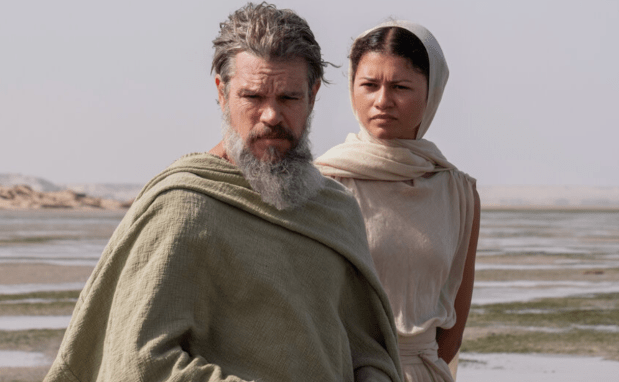
What Nolan has achieved with his Odyssey is extraordinary
The Odyssey, together with its sister work, the Iliad, inaugurates the Western literary canon. For almost three thousand years they have been recited, copied, analyzed… They have moved, inspired, and guided millions of people over dozens of centuries. In all of human history, very few works have earned such widespread recognition — so much so that what lives within them reaches, in one way or another, people who not only have never read them, but did not even know they existed.
Nolan confronts this work, respects it and, at the same time, makes it his own. That, to me, is an enormous achievement.
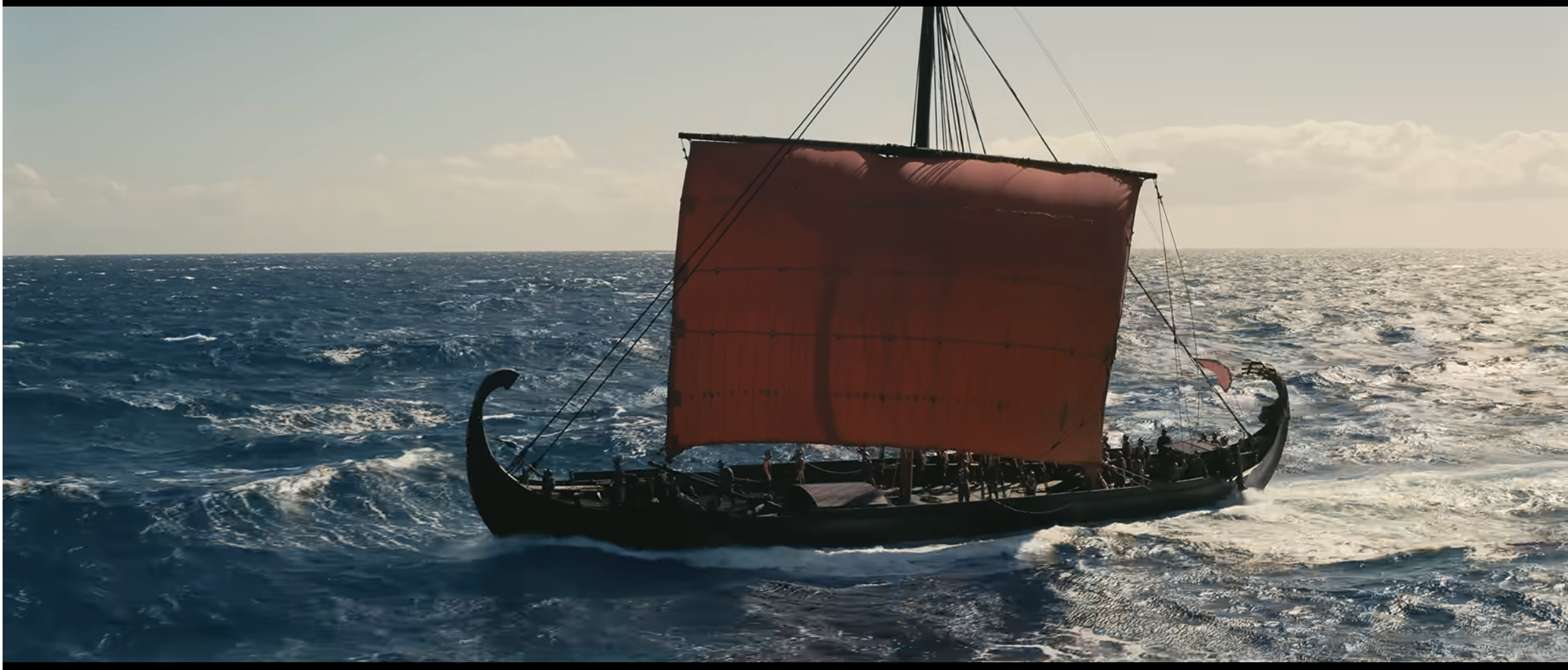
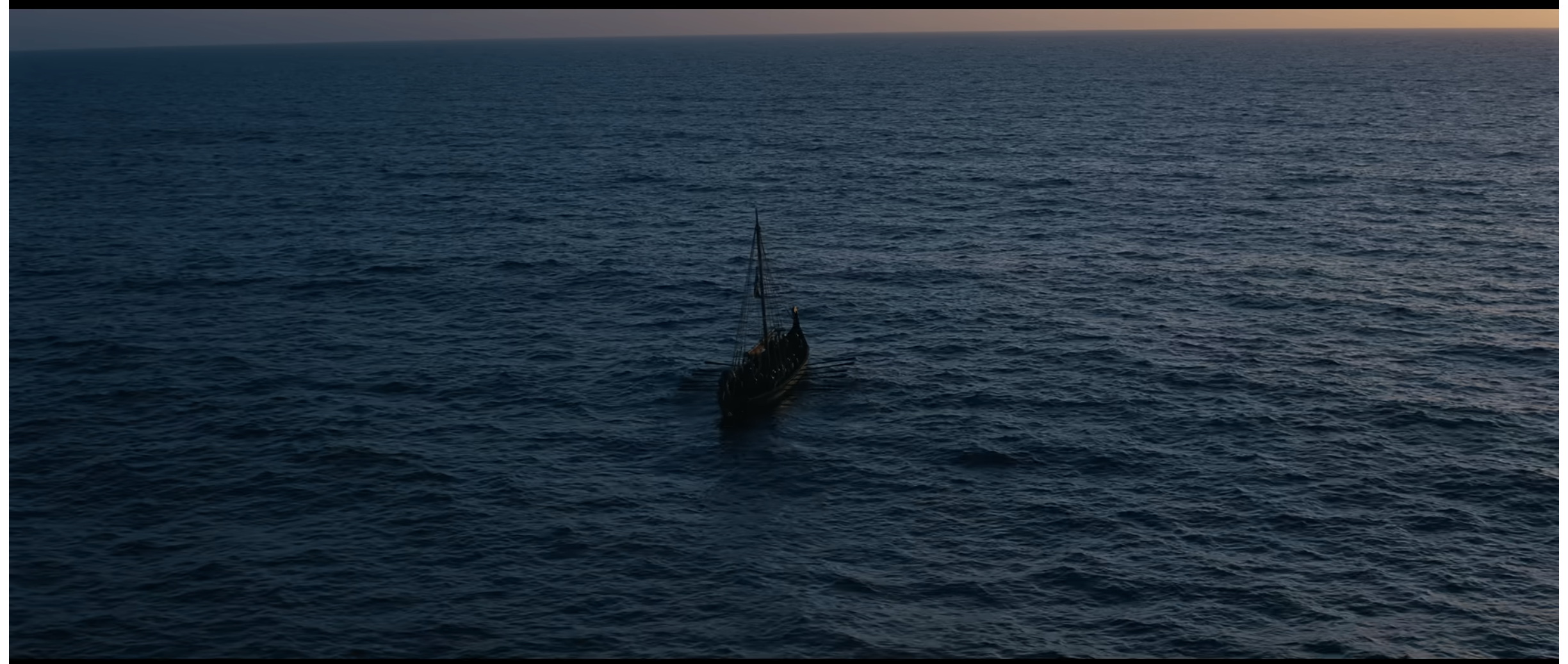
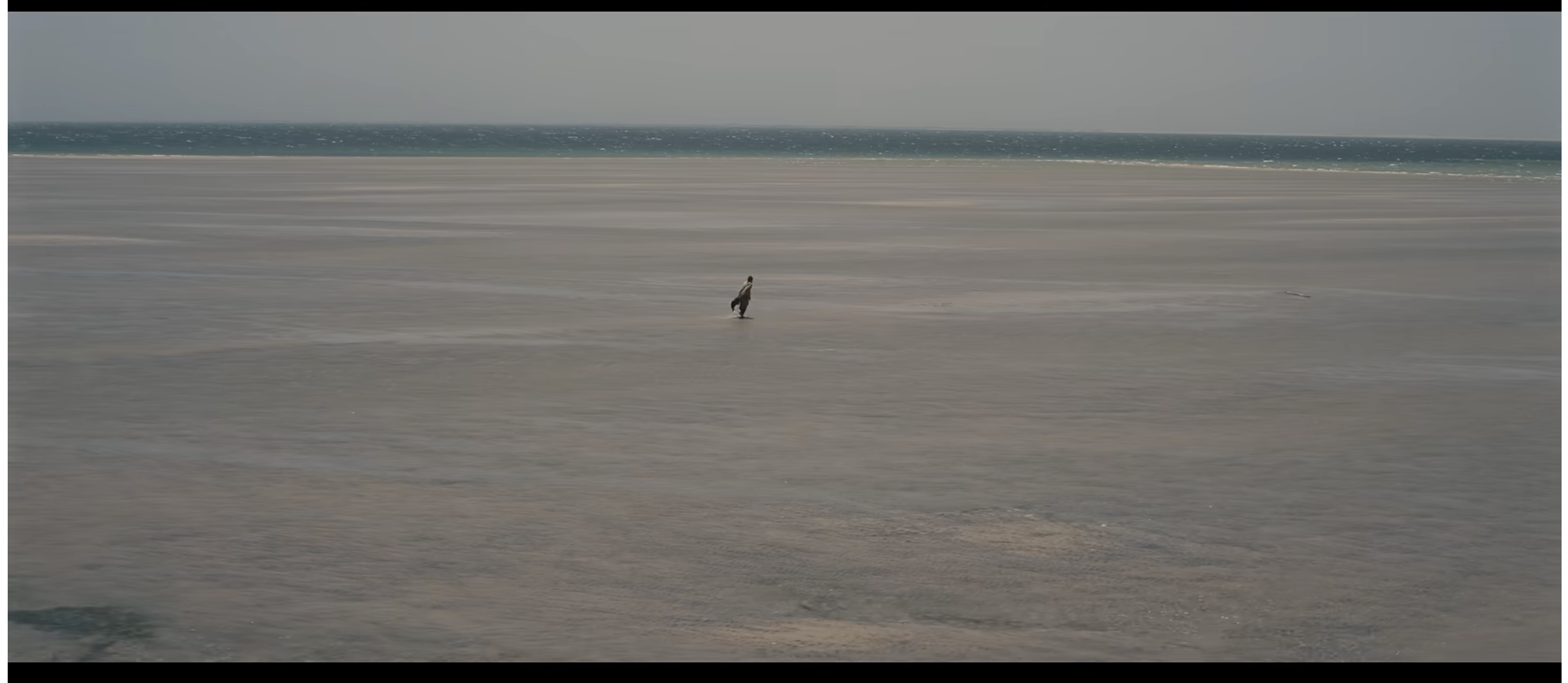
He respects it because the film puts images to what many had imagined for centuries and, for my taste, does so successfully. To begin with, the «black Pontus» of the Odyssey takes on physical form with Nolan. The sea is a «real» sea, one you feel you could touch and smell. I don’t know exactly how he manages it. I think it has to do with the light, with the way he captures those waves that, without being excessive, without breaking, make the ship rock — waves that convey the contrast between the fragility of the wood and the immensity of the sea. There are storms too, of course; but what has impressed me most is the sea in its natural state; that is, neither rough nor completely calm; that sea that moves like a living being, and with which Ulysses and his companions must contend.
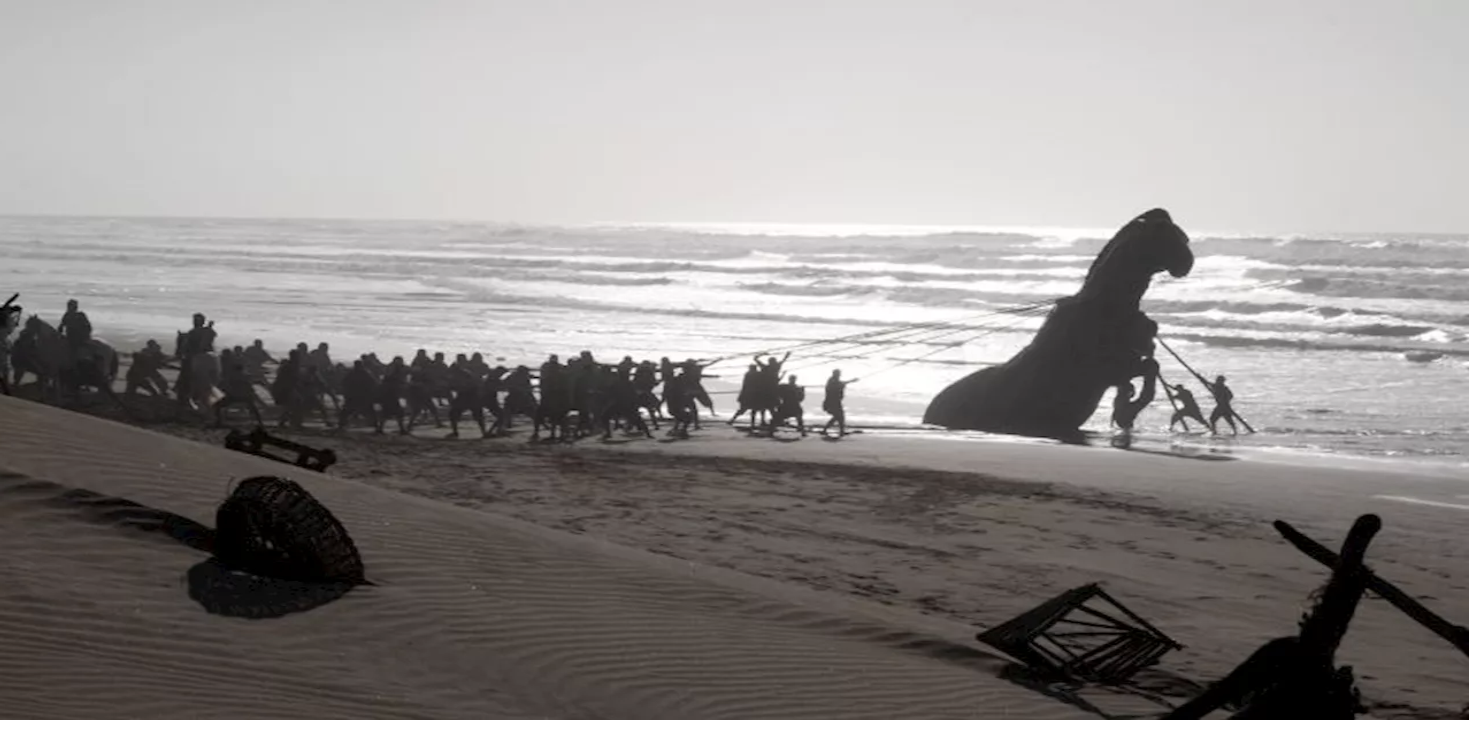
Second, the Trojan Horse. Nolan’s horse is not a contraption on wheels, as it has so often been depicted, but a wooden sculpture showing a horse in motion, rearing up on its hind legs. As a result, it has to be left behind, half-buried in the sand of the beach, which gives it an air at once majestic and decadent that connects with a fairly obvious cinematic reference: the Statue of Liberty at the end of Planet of the Apes. Finding something original in a figure that has been depicted endlessly for millennia is an undeniable accomplishment.
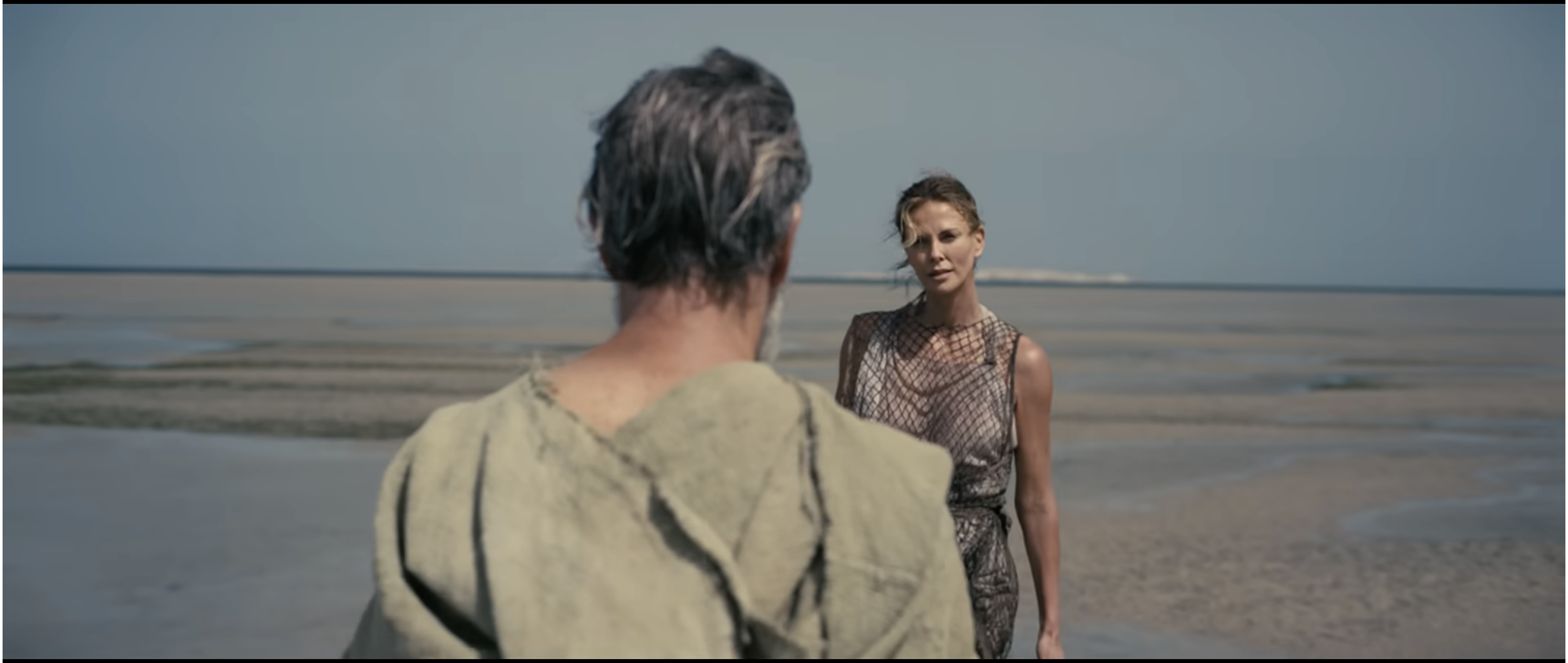
Third, Calypso’s island. As we shall see, this is a nuclear point of the film, and the way it appears could not be more suggestive: the sense of solitude, light, tranquility and, at the same time, desolation turns it into a stand-in for heaven or limbo — which is precisely the function it serves. Calypso herself, played in the film by Charlize Theron, is presented as the embodiment of that character who is a woman without being one, and a goddess without ceasing to be human.
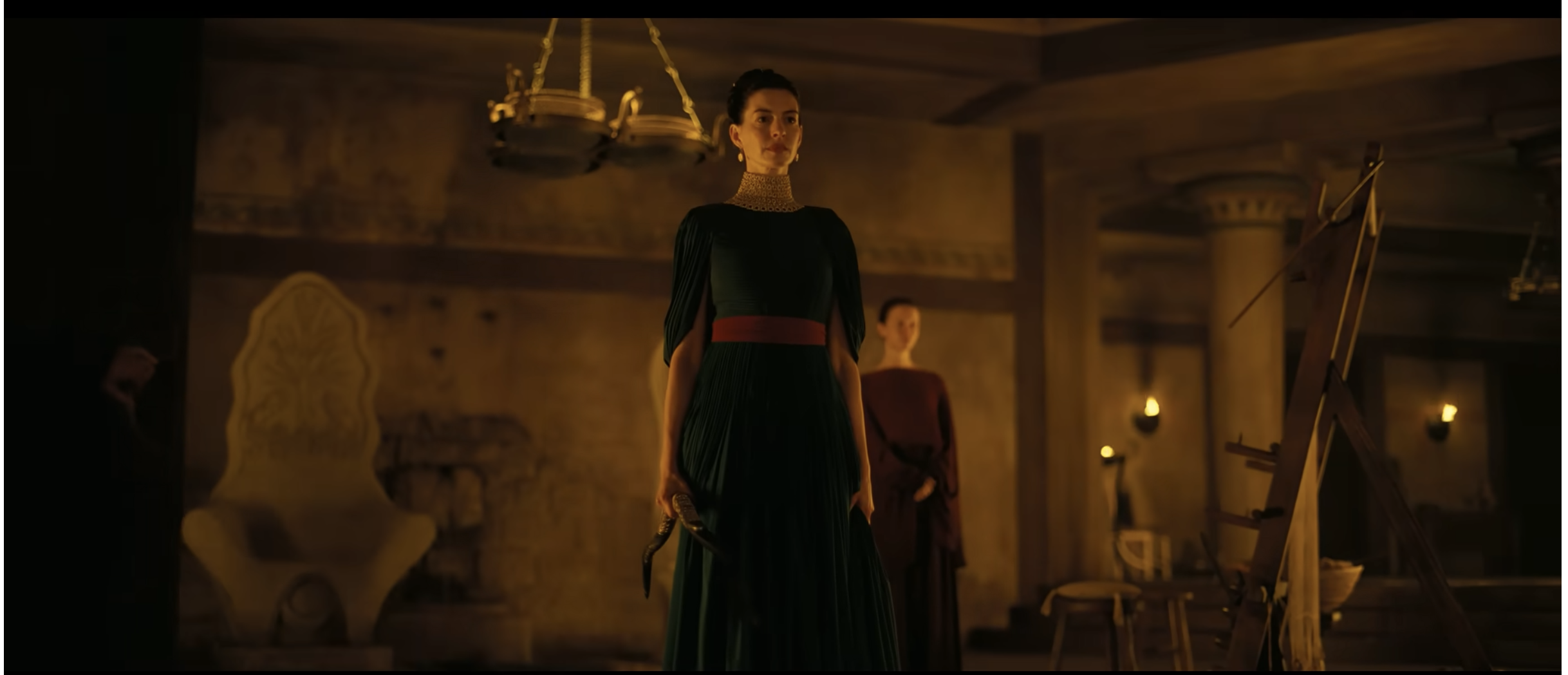
Fourth, Ithaca, where we find Penelope and the servant women, the old retainer and Argos, the dog that has been waiting for him, the suitors and the contest in which the bow must be strung; there is Telemachus and his journey in search of news of his father. In short, all the essential elements, on an island full of light outside but dark inside the palace, where the suitors plunder Ulysses’ estate while awaiting Penelope’s decision.
And, finally, almost all the episodes of the voyage are recreated: Circe, the sirens, the Laestrygonians and, above all, Hades, in one of the most striking scenes of the entire film. In all these cases, Nolan achieves something that is far from easy: making plausible a fantastical tale full of elements that resist cinematic treatment. For example: we know that Circe turns Ulysses’ companions into pigs; but how do you represent that visually? The way Nolan does it strikes me as masterful — as does his treatment of the episode of the sirens. How do you go about showing a song so sublime that it makes people lose their senses? Nolan’s choice — to present it from the perspective of the ship’s crew, not from that of Ulysses or an external third party — strikes me as brilliant.
So anyone who wants to see an «illustrated Odyssey» will not be disappointed; quite the opposite. They will surely come away deeply satisfied.
But the film is more, much more.
The film is, first and foremost, a portrait of Ulysses. And here, once again, the connection with Homer is essential. In general, all the characters of the Iliad and the Odyssey are human, tremendously human (the gods included). Each has strengths and weaknesses, areas in which they excel and others in which they are surpassed. Their decisions are not always governed by the strictest moral criteria: desire, pride, or vanity also play their part. Sometimes they get it right and sometimes they get it wrong.
Ulysses fits that pattern too. Ulysses, «man of many wiles,» is ingenious and has an enormous practical sense. If he must lie, he does (the Trojan Horse being a case in point), and his decisions are not always the right ones. Nolan takes these elements and creates a human Odysseus who, moreover, has a perfectly intelligible emotional dimension.
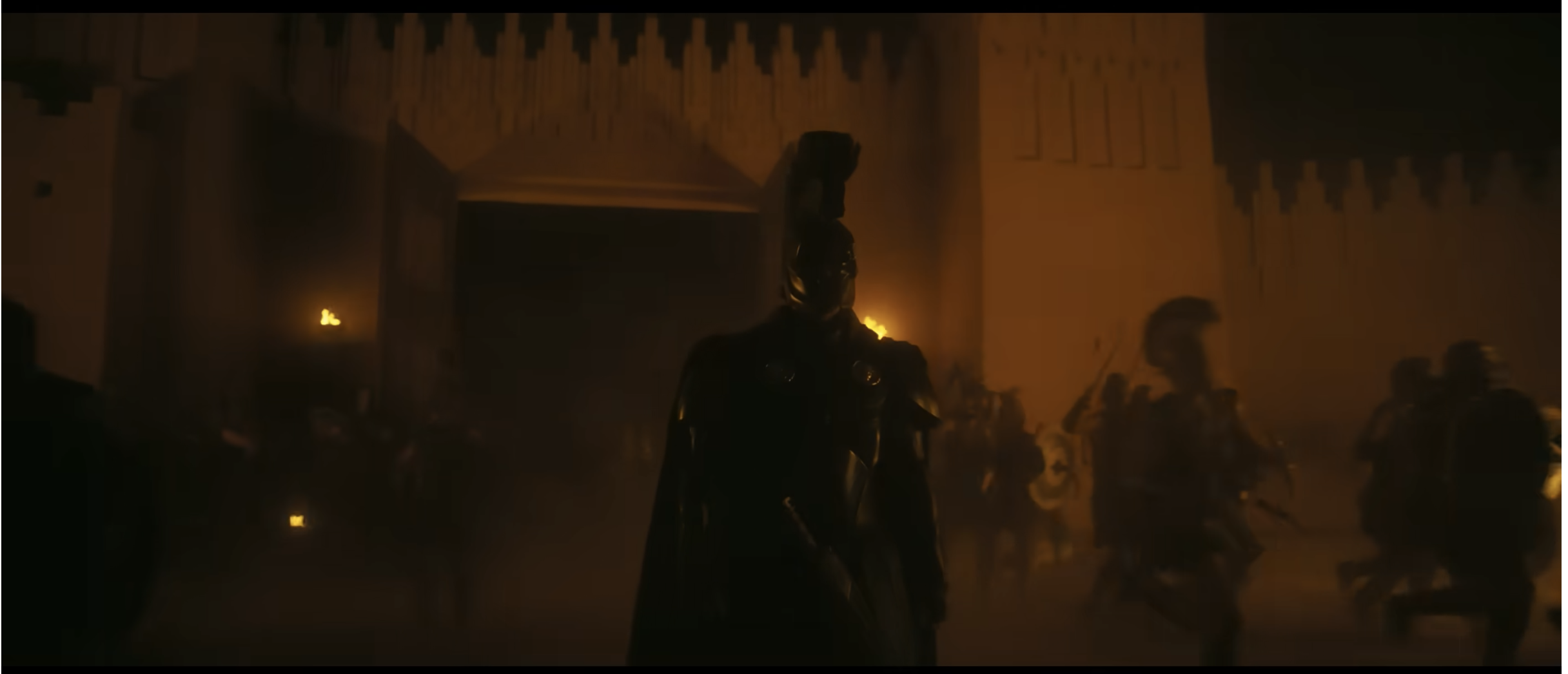
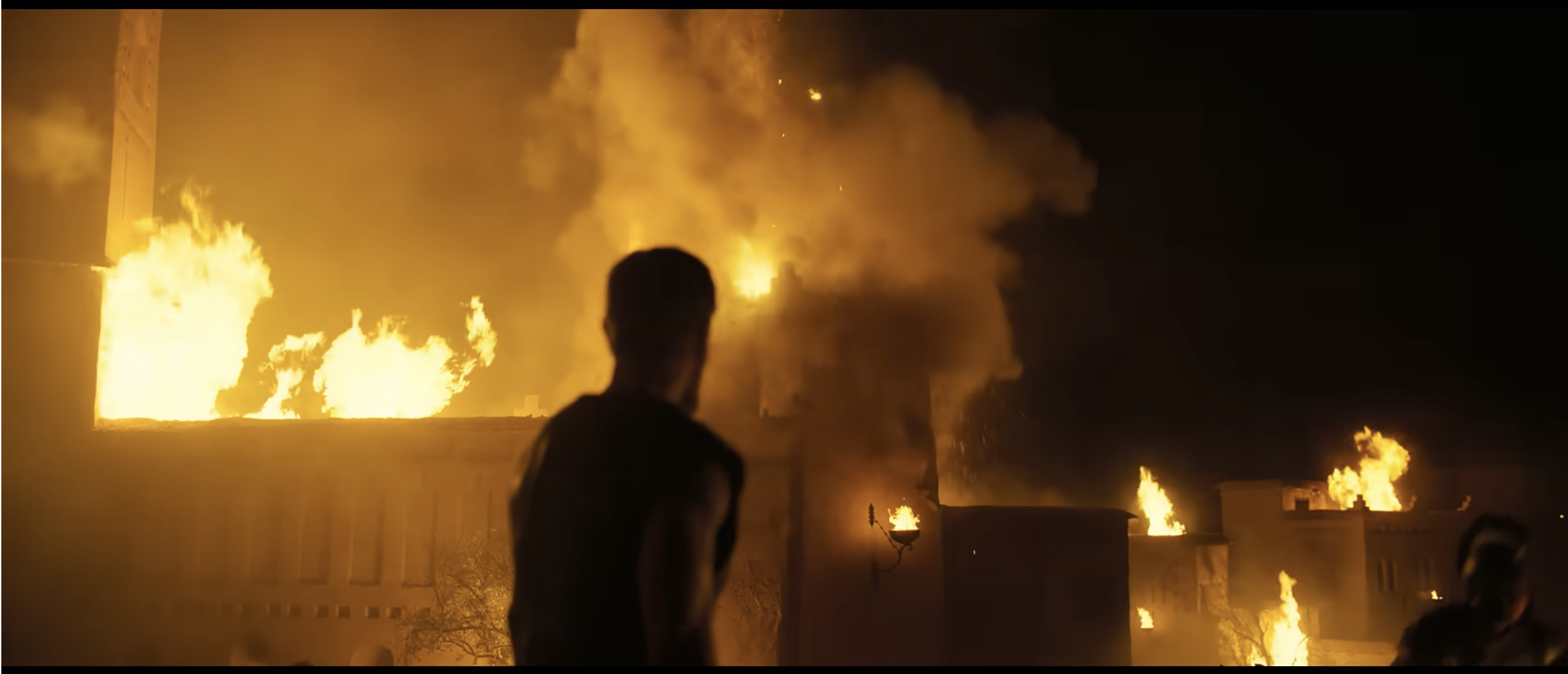
Nolan’s Odysseus is a character scarred by war — a war personified in the taking of Troy and linked to naked power, embodied by Agamemnon, another enormous success of the film, a character who is a symbol and whose face is never fully seen. Odysseus goes to Troy not out of conviction, but because he has no other choice, as he explains to Penelope before departing. Once there, he contributes decisively to winning the war; but at the same time, he is left shattered by the horror it entailed. He is also aware that he had to sacrifice even his own soldiers to achieve the objective (Sinon); and those decisions accompany him in the form of torment and remorse.
That conflict develops and deepens throughout the journey home, when he must face new decisions that mean sacrificing some of his companions. At a certain point, they come to distrust him, which ends up isolating him as well. That is how he winds up on Calypso’s island, where, through the consumption of the lotus flower, he ends up forgetting his family and his history and even loses all sense of the passage of time. The island thus becomes the image of a cold eternity, defined by the absence of time, change, and connection with others. An existence that could be pleasurable; but one that Odysseus ultimately rejects: life keeps pulling at him.
The stay with Calypso ends up becoming the axis of the film. It opens with a scene in the palace of Ithaca where the suitors enjoy a banquet before the despair of Telemachus and Penelope, who wonder whether Odysseus is still alive or dead; and from there it moves to the island where he remains in a state of ataraxia — but where memories, at times, come flooding back. Those memories end up becoming the account of the entire voyage. The film thus weaves together the story of Ithaca, the relationship between Calypso and Ulysses, and the tale of the return, into which images of the fall of Troy are also inserted. It is an intelligent decision that gives coherence to such a complex narrative and, moreover, ends up becoming a kind of fabric that in some way evokes what Penelope herself does with her daily weaving and unweaving, to avoid making a decision about which suitor she will choose as her husband.
The final part of the film covers Odysseus’ return and the punishment of the suitors. Everything in the film is meaningful, but in this section I would highlight, on the one hand, the dialogue between Ulysses, still disguised as a beggar, and Penelope, and on the other, Odysseus’ fight against the suitors.
The dialogue makes explicit Ulysses’ sense of guilt — a guilt underscored by what may be the most heartbreaking moment of the film: throughout the picture we have repeatedly seen the memory of the beheading of the statue of Athena in Troy on the night the Greeks take the city. In the dialogue with Penelope, we discover that the goddess Athena (played by Zendaya) who has accompanied Ulysses on his journey is, in reality, a young Trojan priestess murdered by the Greeks. We then realize that the beheading of the statue represents the beheading of the woman, and that what we have been watching throughout the film was Odysseus’ remorse for the destruction he caused. This is confirmed even more explicitly when it is acknowledged that the dreaded Sea Peoples who ravage the coasts and cities are nothing more than a product of Greek violence against Troy. War, once unleashed, cannot be contained.
And this connects naturally with the scene in which Ulysses confronts the suitors. It is a long scene in which Ulysses at times seems on the verge of defeat and at others regains the initiative. To understand it properly, one must consider the context: the confrontation takes place in a closed hall (the moment when the doors connecting the great hall to Penelope’s quarters are shut is very deliberate), where the conflict is meant to be resolved in a contained manner, but through violence. To guarantee that the only weapon present will be Ulysses’ bow, all the arms are removed from the room and stored in a chamber above the banquet hall (this is important). Odysseus, moreover, forbids Telemachus to intervene, since he is about to break the law of Zeus by attacking the guests in his own house.
It so happens, however, that one of the suitors manages to reach the weapons chamber. They lock him in, but he manages to break open a hole in the floor of the room to drop the weapons into the hall where the confrontation between Ulysses and the suitors is unfolding. Telemachus then intervenes to prevent the man in the weapons chamber from getting the arms to the suitors. In the struggle, Telemachus is wounded in the belly. Ulysses is wounded too, but manages to kill the «villain» of the film (who has a storyline of his own, though I won’t dwell on it here), and thus seems triumphant in his confrontation with Penelope’s suitors. When he collapses into his wife’s arms, however, it seems he is about to die. Yet at the last moment he says that what awaits him is not death, but exile. The next scene shows Telemachus as king, and Ulysses and Penelope setting out on a voyage toward the setting sun. Odysseus wears a bandage on his neck, where he was wounded. Apparently, all ends well.
My reading is a different one. What the long confrontation scene seeks to show is that controlling violence is an illusion. Once unleashed, it knows no limits (and here there may be a reference to Nolan’s previous film, Oppenheimer). Thus, in the end, the weapons that were meant to be hidden end up in the hall; Telemachus intervenes, against his father’s wishes; and what was meant to be a fair fight ends up as a bloodbath in which both Odysseus and Telemachus are wounded.
And they are not wounded just anywhere. Odysseus is wounded in the neck, Telemachus in the belly. These are two wounds that are, in principle, fatal. Could it not be that, in reality, both of them die, and that Telemachus as king and the voyage with Penelope toward the setting sun are nothing more than the reverie of a dying Ulysses? I believe the director deliberately leaves both possibilities open — that of final triumph and that of death; but I choose the latter, which turns the Odyssey, in reality, into the Iliad: a song to the pain of war, to senselessness, to guilt and to failure; a song that uses Ulysses’ voyage to tell us that there is no escaping evil. It accompanies us always.
This, for me, is Nolan’s greatest achievement. An old debate asks which is better, the Iliad or the Odyssey. Nolan embraces both and films an Odyssey with the spirit of the Iliad. A masterpiece.
Incidentally, I have always preferred the Iliad to the Odyssey.
Posición 125

